
Personality Type assessment
See your patterns

596,850 people who answered the original personality statements online in 2016–2018, used for your percentile comparison
You get a reading of how you work, how you are with people close to you, and what happens under pressure. The report also names the habit that feels natural to you but may be hardest for others to live with.
Free interpretation of your answers when you sign in
The full report is $30.It explains where your strengths start to cost you and takes you through the full guide to your type, chapter by chapter.
100% money-back guaranteeNot happy with your full report? Ask for a refund within 30 days.
See how Personality and Character adds honesty and humility to five traits. Try Personality and Character
Step 1 of 5
Describe yourself as you are now, not as you think you should be or hope to become.
Statement 1: At a party, you end up at the center of things.
Statement 2: You don’t feel much concern for other people.
Statement 3: You’re ready well before you need to be.
Statement 4: Pressure gets to you quickly.
Statement 5: You have a big vocabulary.
Statement 6: In most conversations, you say less than the others.
Statement 7: You’re interested in people.
Statement 8: You leave your things lying around.
Statement 9: You’re relaxed most of the time.
Statement 10: Abstract ideas are hard for you to follow.
You’ll need to agree to the Terms of use to continue. None of these answers have been added to the research pool, and you can agree later.
What decades of research reveal
These findings come from published research on personality traits. They describe patterns across large groups, not predictions about what will happen to any one person.
-
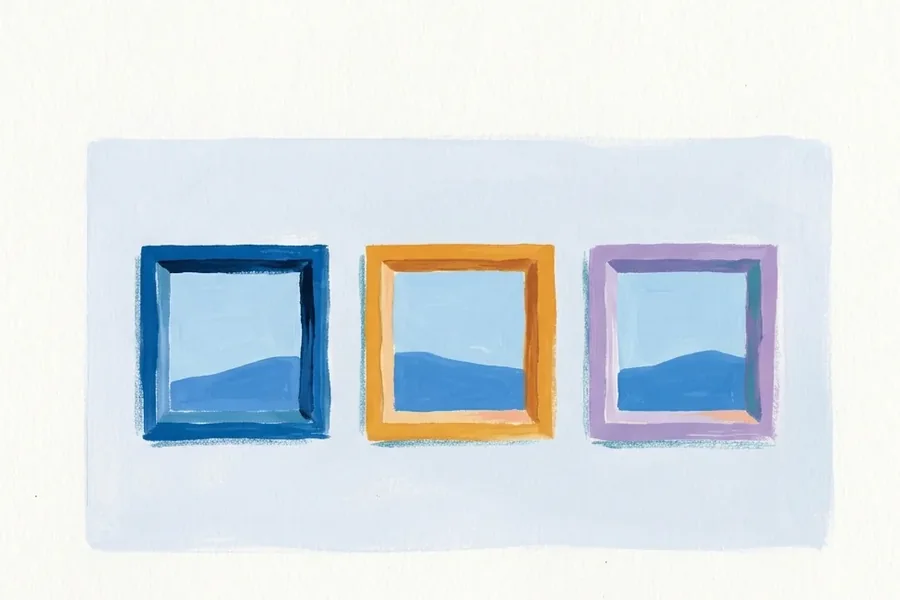
Traits predicted life outcomes as well as family money
Personality traits predicted how long people lived, whether marriages ended, and what work people ended up doing about as well as family money and cognitive ability did.
Roberts, Kuncel, Shiner, Caspi & Goldberg (2007). Perspectives on Psychological Science 2(4), 313–345.
-
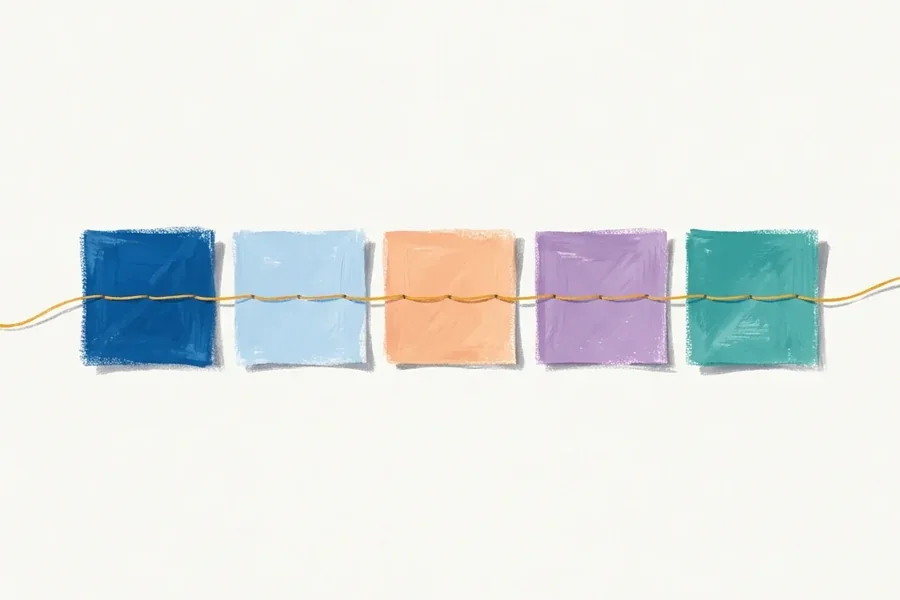
Across five occupations, conscientiousness predicted performance
Conscientiousness, which covers planning ahead, staying organized, and finishing what you start, predicted job performance across five kinds of work, while extraversion related to it in managing and sales.
Barrick & Mount (1991). Personnel Psychology 44(1), 1–26.
-
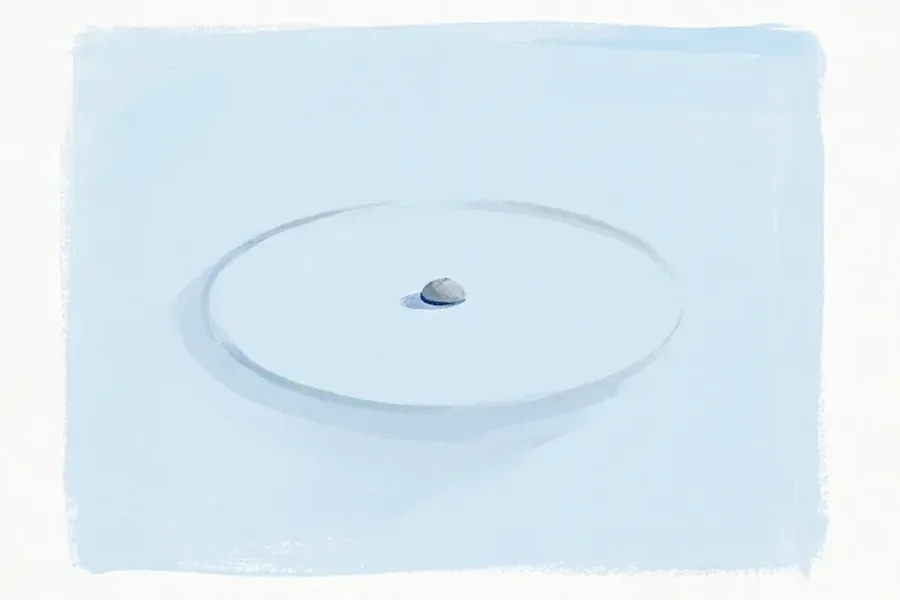
Higher conscientiousness went with slightly longer life
Across 20 long-term studies, the correlation between conscientiousness and how long people lived was real but small, at 0.11. Persistence and being organized were the strongest parts of the trait.
Kern & Friedman (2008). Health Psychology 27(5), 505–512.
-

Conscientiousness added as much as intelligence
Across studies of more than 70,000 students, conscientiousness added as much as intelligence to predicting later academic performance after earlier school results were accounted for.
Poropat (2009). Psychological Bulletin 135(2), 322–338.
What does it measure?
These five traits describe broad patterns in how you relate to people, approach responsibilities, respond to emotional pressure, and engage with ideas and experience. You’ll read them as separate scales, not boxes, and see how four also produce one of the four letters while Emotional stability produces none.

Extraversion
How much you tend to gain energy from people, start conversations, and feel comfortable being noticed. This is about your usual social pace—not how friendly, confident, or capable you are.
More reserved , More outgoing
Gives your E or I
Agreeableness
How much you tend to notice other people’s needs, make room for their point of view, and protect the relationship while making decisions. This can bring warmth and cooperation—but it can also make your own needs easier to overlook.
Less accommodating , More accommodating
Gives your T or F
Conscientiousness
How much you naturally organize your time, plan ahead, and follow through. Structure can turn intentions into progress, while too much of it can make a day feel less flexible.
Less structured , More structured
Gives your J or P
Emotional stability
How steady you tend to feel when circumstances are uncertain, demanding, or disappointing. This reflects sensitivity to pressure and shifts in mood, not whether you care deeply or have faced difficult things.
More sensitive to stress , Less sensitive to stress
Gives no letter, reported on its own
Openness
How much you enjoy possibilities, imagination, unusual connections, and thinking beyond what is immediately in front of you. It does not measure intelligence or ability; it describes where your attention naturally likes to wander.
More practical , More drawn to ideas
Gives your S or N
What is this assessment?
50 statements
Ratings use the scale from Very inaccurate to Very accurate, 10 at a time
5 traits
- Extraversion
- Agreeableness
- Conscientiousness
- Emotional stability
- Openness
4 letters
- E/I
- S/N
- T/F
- J/P
The Emotional stability trait gives no letter
596,850 people
They answered original statements online (2016–2018), and your percentiles compare with theirs

This assessment uses 50 plain-English statements adapted from the public-domain International Personality Item Pool. You rate each statement from Very Inaccurate to Very Accurate, working through five steps of ten statements. The wording asks about familiar preferences and behaviors, so you can answer from everyday experience rather than choosing an ideal version of yourself.
Your answers produce five traits and a four-letter type. Four provide the letters: E/I for Extraversion, N/S for Openness, F/T for Agreeableness, and J/P for Conscientiousness. Emotional stability gives no letter and is reported alone. Letters mark a side of the midpoint, while trait scores show your position on each scale. Scores are percentiles against 596,850 people who answered the original statements online between 2016 and 2018.
Why take it here?
Beyond the label
Each of your five trait scores is placed against 596,850 people who answered the original statements online, so you learn where you actually fall on each trait instead of receiving a label alone.
The cost of your strengths
A strength of yours may turn into something the people around you have to absorb. The report follows that pattern across three chapters on work, close relationships, and pressure.
Letters with a backstory
Each of the four letters people know is tied to the trait score behind it, so you can tell which parts feel settled and which came from a close call.
A risk-free choice
You have 30 days from buying the full report to read it before deciding. If you are not happy, you get 100% of what you paid back without giving a reason.

What the full report shows about you
The paintings, sections, and reading times here come from a made-up person’s report. Your report would be written from your own answers.
-
Your trait results
How each trait gives you an advantage, then costs you when that same quality goes too far.
The blind spot each trait creates: what feels right to you but bothers other people.
- Extraversion
- Agreeableness
- Conscientiousness
- Emotional stability
- Openness
about 18 min
-
Your life in context
How you come across at work, with people close to you, and under pressure, from your own trait scores.
- At work
- With people close to you
- Under pressure
about 6 min




Contents
13 sections, 8,284 words, about 36 minutes.
- About this report about 1 min
Your four-letter result
Your four-letter pattern, and how settled each letter is. about 2 minYour trait results
Extraversion about 4 min- Agreeableness about 3 min
- Conscientiousness about 4 min
- Emotional stability about 4 min
- Openness about 3 min
Your life in context
At work about 2 min- With people close to you about 2 min
- Under pressure about 2 min
Your type in depth
The Caretaker guide about 1 minYour comparisons and answers
With other people, by four-letter code about 7 min- Your answers about 1 min




Common questions
Where do the statements come from?
Each assessment uses a published instrument, except for some pillar check-in questions we wrote ourselves. The method page lists every instrument, its authors, year, and full citation. Most published items use our rewording of public-domain material rather than the originals, so no published reliability figure describes the wording you answer. The interest activities and self-esteem statements appear exactly as published, word for word, while our questions are labeled as ours wherever their numbers appear.
Can my type change?
A letter labeled Nearly a tie can flip on a retake because the score is close to the midpoint, so a small difference in the answers puts it on the other side. A Strong letter is less likely to flip. We have not measured how stable our reworded statements are over time, so we do not give a retest figure. Interest preferences tend to settle during the college years, roughly from 18 to 22.
Can I use this for hiring?
No. Nothing here was built or checked for choosing, promoting, or screening out people. The assessment also measures no ability, intelligence, or employability.
What happens to my answers?
We keep your personal information private and never sell it, while anything that identifies you goes only to the companies needed to run the site and take a payment. To delete your account and everything saved in it, email us at hello@nomigram.com from the account’s own address.
How do these assessments compare with other sites?
Nomigram’s Personality Type assessment covers ideas often associated with MBTI, the Myers-Briggs Type Indicator, and sites such as 16Personalities. Its five traits are what researchers call the Big Five, the five-factor model, or sometimes OCEAN. It reads E or I from Extraversion, S or N from Openness, T or F from Agreeableness, and J or P from Conscientiousness, with Emotional stability reported separately. A four-letter result from another site may differ because each assessment uses its own questions and scoring.
Nomigram is not affiliated with, endorsed by or sponsored by the Myers & Briggs Foundation, The Myers-Briggs Company or NERIS Analytics Limited, and the names are used here only to explain how our assessments relate to them. MBTI, Myers-Briggs and Myers-Briggs Type Indicator are trademarks or registered trademarks of the Myers & Briggs Foundation, Inc. in the United States and other countries. 16Personalities is a trademark of NERIS Analytics Limited.
Other assessments
Each assessment gives you its own result, and completing another adds that result to your results page alongside the others.
What you’re like

Discover detail within each trait
Personality Facets
Your 30 personality facets show where two parts of the same trait point in different directions, such as being exact about deadlines but loose about tidiness. You can see what each contrast may mean for the people around you.
Take the assessment
Honesty and humility, sixth trait
Personality and Character
See how six traits and 24 facets, the narrower habits inside each trait, describe the way you tend to come across at work and with the people around you. The sixth, honesty and humility, examines how you tend to respond when taking more would go unnoticed, a question no five-trait assessment covers.
Take the assessment
Your work life

Find work that fits
Career
You see which parts of a working day pull you in and which drain you. The report names where a strong interest may narrow the work you consider and gives you example jobs to look into.
Take the assessment
How you work with others
Work styles
You see which of four work styles leads for you, what feels reasonable under pressure, and how the same behavior may land on someone working differently. You learn where friction starts with colleagues and how to work with the other three styles.
Take the assessment
Life and self-esteem

Find where attention matters most
Five pillars
You rate health, money and work, relationships, outlook on life, and beauty twice, for how each is going and how much it matters to you. The report starts with the part where what you want and what you have are furthest apart.
Take the assessment
Understand your self-esteem
Self-esteem
Answer 10 statements about how you regard yourself, then see what tends to raise or lower self-esteem. Learn how your score tends to move over the years, how steady it usually is, and where it shows at work and in close relationships.
Take the assessment