
Types / Interest types / Artistic · The Creator
AArtistic interest · The Creator
The Sculptor.
Happiest when imagination becomes something tangible—and someone can use, notice, or feel it.
Artistic first, Realistic second.
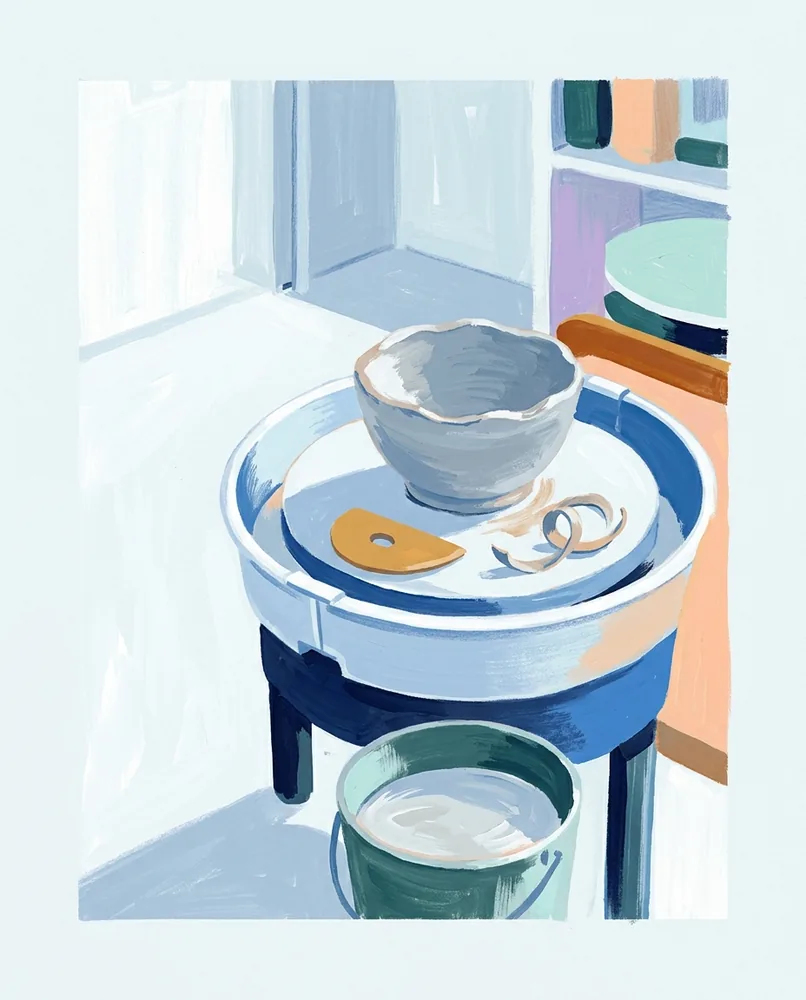
What drives the Sculptor
You may begin with a picture that exists only in your mind: the curve of a chair, the mood of a room, the shape of a creature no one has seen. But imagining it is only the first satisfaction.
You make ideas tangible.
You want to choose the material, solve the awkward joint, test the weight, and watch the idea survive contact with the physical world. A rough prototype is not a disappointing version of the finished thing; it is how you discover what the idea was actually trying to become.
At your best
You often like giving an idea a physical life.
The trade-off
Purely abstract brainstorming can feel unsatisfying, while practical complications may absorb so much attention that the original spark becomes harder to see.
What draws you
This mix creates a practical imagination: you do not want to choose between vision and craft. You want the materials and constraints to become part of the creative answer. A limitation often sharpens the design rather than diminishes it.
Where it fits
This combination can appear in forming clay, designing a room down to its door handles, creating costumes, restoring furniture, styling a performance, or building creatures for a film. Interior designers, craft artists, set builders, and special effects crews all translate an inner image into a physical experience. The work is expressive, but it is also full of decisions about tools, surfaces, scale, durability, safety, and sequence. Your creativity is often easiest to recognize after the invisible problem-solving has made the result look natural.
How you think
You may think more clearly while your hands are occupied. A sketch, sample, mock-up, or rearranged pile of materials gives your thoughts something to push against. An idea that sounds perfect in your head can reveal a better direction once it has weight, texture, proportion, and limits. This is why a finished concept may not feel finished to you until it can be built, worn, entered, touched, or put to use.
About this information
Artistic and Realistic have Investigative between them on the hexagon, but they begin with different questions. Artistic asks what could be expressed or imagined. Realistic asks what can be handled, measured, assembled, repaired, or made to work.
Our take Built on O*NET’s descriptions of the work each interest describes[1]. It sketches a mix of interests, so expect some lines to fit you better than others—and use the activities to see what holds up in practice.
O*NET, the U.S. Department of Labor’s job database, says Artistic work involves “creating original visual artwork, performances, written works, food, or music for a variety of media, or applying artistic principles to the design of various objects and materials.” Realistic work involves “designing, building, or repairing of equipment, materials, or structures…”[1].
How the two letters work together
One type between them on the hexagon
Holland arranged the six interests in a hexagon, placing the ones he considered most alike closest together. Your two interests have one other type between them. They’re related, but each brings something the other doesn’t, which may leave you looking for a role with both a familiar center and room to stretch.
- A
Artistic · The Creator Open-ended work that makes room for self-expression, imagination, and original ideas.
- R
Realistic · The Doer Practical, hands-on work with tools, machines, plants, or animals.
When strengths overreach
Every strength solves a real problem. When it runs unchecked, the same strength can create a new one. The cards below name the turning point and the cost you may notice.
One more version
You bring care, precision, and a clear inner picture to your work. You may keep revising when the result already serves its purpose, because each change promises a closer match to what you imagined. A deadline can start to feel like an interruption, while useful feedback sounds like pressure to settle. On a shared project, other people may wait for a version they can use while you keep refining details they cannot see. The private ideal can become more important than the work’s actual recipient.
The idea stays inside the object
At your desk, on a worksite, or beside a sample tray, you may trust the finished object to speak for itself. Your choices of form, texture, arrangement, and materials can communicate more than a long explanation. Someone can admire what you made and still miss the memory, question, or decision inside it. When the thinking stays hidden, others may read the work as decoration or instruction rather than a point of view. You may then feel unseen even while the object receives praise.
Waiting for the idea to come back
When the original image is vivid, you may work with unusual energy and patience. When that feeling fades, ordinary tasks can seem like proof that the idea has left you. A commission, class, or shared project still needs progress after inspiration becomes quiet, and other people may experience the pause as uncertainty about whether the work will arrive. Waiting for the feeling to return can protect the idea from imperfect decisions, but it can also leave the project dependent on a mood you cannot schedule.
Working across interests
See how a strongest interest in Artistic tends to affect the way you work alongside each of the six interests.
- R
Realistic · The Doer
- Where your styles complement each other
- You picture how it could look or feel. They know what it’ll take to build. Your imagination can give their practical skill a purpose people want to experience.
- Where your styles may pull in different directions
- You might still be changing the idea after they have started building it. Your revisions can make the result more useful, while their early work can show you which changes are still possible without making the whole effort heavier.
- I
Investigative · The Thinker
- Where your styles complement each other
- New ideas may be your contribution, while they may test which ones can withstand questions.
- Where your styles may pull in different directions
- You might love an idea partly because nobody’s tried it—which may be exactly why they need more proof before trusting it.
- A
Artistic · The Creator
- Where your styles complement each other
- You both value original ideas and room to make them your own.
- Where your styles may pull in different directions
- When you both have a strong picture of how it should look, each of you may start protecting your own version.
- S
Social · The Helper
- Where your styles complement each other
- You may make something original, while they may think about who it is for and how it will reach them.
- Where your styles may pull in different directions
- They might ask whether it’s what people need just when you’re trying to keep the original idea intact.
- E
Enterprising · The Persuader
- Where your styles complement each other
- You may bring the original idea, while they may find the people and backing it needs.
- Where your styles may pull in different directions
- Their push toward an outcome can feel like a box around your idea.
- C
Conventional · The Organizer
- Where your styles complement each other
- New ideas may come from you, while they may keep the details, deadlines, and records in order.
- Where your styles may pull in different directions
- You might want to keep things open long after they’d like them settled and written down.
These interests describe the kinds of work people are drawn to, not how anyone handles closeness or conflict.[2]
With other people
At work
What may feel easy
In a shared studio, the Sculptor may get along best with people who show as well as tell. Coworkers with Artistic, Investigative, or Realistic interests often enjoy the movement from sketch to material to revision: an idea becomes something you can examine, change, and eventually put in the world. A useful day may be one where imagination gains a shape sturdy enough for other people to respond to.
Where friction may show up
People led by Social, Enterprising, or Conventional interests may bring the parts of the job that become visible after the making begins. They may ask who the piece is for, what it costs, how it will be presented, or when it is due while you are still discovering what it wants to become. You may need one more pass; they may need an invoice, an audience, or a commitment. Their practical questions can feel like pressure, but they may be protecting the work’s chance to reach anyone at all.
What they might bring
Practical follow-through: someone to price the materials, protect the schedule, and notice when the clay is running low.
When you are much alike
Two makers can bring a quieter conflict: each may have a vivid picture of the finished piece and assume the other sees it too. The work becomes a negotiation between two private visions, and compromise can feel less like collaboration than losing the point.
Research behind this panel
Support from coworkers matters in its own right—not merely as an extension of support from a manager[C54]. A compatible teammate can make work feel more workable through practical help, shared context, and the sense that responsibility is not being carried alone. That does not mean matching personalities are required; it means the way two people communicate, divide effort, and respond under pressure can either reduce friction or quietly add to it.
People included in the research
Research on teams mixes real workplaces with student project groups, so treat it as a rough guide. A team is also influenced by its manager, incentives, workload, power differences, and whether people have room to work in their own way.
As a friend
What may feel easy
A friend who will spend a Sunday at a woodworking fair, help haul home a found chair, or simply sit nearby while you work may feel easy. The connection does not have to compete with your need to make something; it can become part of the making.
Where friction may show up
Friends who love a large dinner or a full weekend may wonder why the workshop keeps winning your time. Meanwhile, two makers can care about each other and still disappear into separate studios, each assuming the other understands. The friendship may need deliberate invitations, because shared appreciation does not automatically create shared time.
What they might bring
A reason to step away from the workshop, plus friends who can admire the result without needing to understand every hour that went into it.
Research behind this panel
In a study of friendship networks, sharing humor, hobbies and interests, and moral beliefs were among the best predictors of feeling close[C24]. Friends do not need identical personalities. They often need enough shared ground to feel understood, enough room for difference to stay interesting, and enough trust that disagreement does not threaten the bond.
People included in the research
Most friendship studies so far have looked at students. Friendships later in life can carry different pressures, histories, and choices about time, so treat these findings as a starting point rather than a complete picture.
In a relationship
What may feel easy
A partner who can see possibility in the half-sanded table—and respect the attention it takes to finish it—may feel natural. They do not have to share the hobby, but it helps if they can recognize that making is one of the ways you become present.
Where friction may show up
Someone who wants a tidy home or a busy social life may feel second to the workbench. You may experience shop time as restoration, while they experience your absence as a choice against the relationship. With a partner who works much like you do, the opposite problem can appear: both of you retreat into separate projects, and neither notices that closeness has become something you keep postponing.
What they might bring
Company for the ordinary parts of life, and a reason to finish the table instead of endlessly refining it alone.
Research behind this panel
In one research program, giving something up to sidestep a conflict went with worse outcomes for couples, while giving to please a partner went with better ones[C17]. The difference is not the size of the sacrifice alone. It is whether the choice feels freely offered and connected to care, or whether resentment is accumulating because speaking honestly feels unsafe or pointless.
People included in the research
Most of this research studied married, heterosexual couples in Western countries. One study of the push-pull loop included lesbian and gay couples and found the same link[C12]. Use these findings as useful but incomplete clues, not as a definition of what a relationship should look like.
How a third letter can shade it
A full interest code has three letters. The third is a supporting interest, something to hold on to alongside AR. It may not lead your choices, but it can influence the setting, problems, or people that make the work feel worthwhile.
-
ARIARI
Investigative third
Room to investigate why things work, follow the evidence, and get the facts right before acting.
-
ARSARS
Social third
Time spent directly with people, whether that’s teaching, helping, encouraging, or looking after someone.
-
AREARE
Enterprising third
A chance to lead something, make the case for it, negotiate for support, or move it forward.
-
ARCARC
Conventional third
Clear plans, tidy systems, and dependable follow-through, so everyone knows what’s happening and who’s doing what.
Where AR tends to fit
Here are example jobs with this mix of interests, from O*NET[1]. They are possibilities to investigate, not recommendations. A title can fit your interests while the daily setting, training path, pay, or demands do not fit your life. Each link opens the occupation’s page on O*NET OnLine, where you can explore the work in more detail.
- Fine Artists, Including Painters, Sculptors, and Illustrators (opens O*NET OnLine in a new tab)AR
- Makeup Artists, Theatrical and Performance (opens O*NET OnLine in a new tab)AR
- Craft Artists (opens O*NET OnLine in a new tab)AR
- Special Effects Artists and Animators (opens O*NET OnLine in a new tab)AR
- Interior Designers (opens O*NET OnLine in a new tab)AR
- Models (opens O*NET OnLine in a new tab)ARE
- Fashion Designers (opens O*NET OnLine in a new tab)ARE
- Dancers (opens O*NET OnLine in a new tab)ARS
- Commercial and Industrial Designers (opens O*NET OnLine in a new tab)ARI
- Camera Operators, Television, Video, and Film (opens O*NET OnLine in a new tab)ARC
- Merchandise Displayers and Window Trimmers (opens O*NET OnLine in a new tab)ARE
This page includes information from the O*NET 31.0 Database by the U.S. Department of Labor, Employment and Training Administration (USDOL/ETA). Used under the CC BY 4.0 license. O*NET® is a trademark of USDOL/ETA. Nomigram has modified all or some of this information: scores are rounded and only some fields are kept. USDOL/ETA has not approved, endorsed, or tested these modifications. Credits and licenses
The other Artistic types
All 30 interest types →- AIArtistic
The Worldbuilder
as interested in why an idea works as in imagining it in the first place.
- ASArtistic

The Storyteller
someone who wants to make something that reaches people—and stay curious about what they receive from it.
- AEArtistic
The Headliner
someone who needs an idea to reach another person before it feels fully alive.
- ACArtistic
The Curator
Particular about how things look, and just as particular about where they belong.
Take the Career assessment and find your type
Rate 30 work activities to identify your interest type. Then see what draws or drains you at work, which jobs to explore, and where a strong interest can narrow what you consider.

Questions
What makes two people easy to be around?
Similarity is less powerful than most compatibility charts suggest. In national studies of married couples in three countries, the resemblance between two people’s personalities explained less than half a percent of relationship satisfaction after each person’s own traits were counted[C1]. Two studies of friends found a similar pattern[C5][C6]. Being alike may make recognition easier, but it does not automatically create trust, care, or a workable daily life.
What each person brings mattered more. Warmth, reliability, and staying steady under stress were linked with the other person’s greater satisfaction[C1][C2]. And the relationship people were actively creating mattered most. Across 43 studies that followed couples for between 2 months and 4 years, feeling appreciated by a partner and believing that partner was committed predicted how the relationship was going better than any personality trait did[C3]. A trait may influence a tendency; repeated responses teach the other person what it is safe to expect.
So read what follows as a set of places to look, not a verdict about a bond. Notice what feels natural, what gets misread, and what each person has to learn to make visible. People also change. In long-term studies in two countries, being in a first serious relationship went with becoming calmer over the years[C33][C34]. A relationship is not only a meeting of two finished personalities; it is also an environment in which habits can strengthen or soften.
Can this tell whether two people will get along?
No. Assessments cannot yet predict whether two people will get along, fall for each other, or last. In two speed-dating studies, more than 100 answers given beforehand could not predict who would be drawn to whom in particular[C7]. A report can offer language for a conversation, but it cannot account for timing, shared circumstances, attraction, repair after conflict, or the many small choices that make someone feel valued.
Can I read this about someone I know?
You can, but treat it as a set of possibilities rather than a description you can assign from a distance. A type page describes a mix of scores, and the person may experience that mix differently from how it looks to you. Ask what fits, what does not, and what you may have been interpreting too quickly.
Where does this come from?
The numbered sources match the table on our method page. The personality statements come from the public-domain International Personality Item Pool, and the percentiles compare your answers with a published open data set of several hundred thousand people. The ones marked C are the studies behind “With other people.”
- 1 O*NET OnLine, U.S. Department of Labor. Career interest definitions and occupation interest codes.
- 2 Nauta, M. M. (2010). The development, evolution, and status of Holland’s theory of vocational personalities. Journal of Counseling Psychology, 57(1), 11–22.
- 6 Nye, C. D., Su, R., Rounds, J., & Drasgow, F. (2017). Interest congruence and performance: Revisiting recent meta-analytic findings. Journal of Vocational Behavior, 98, 138–151.
- 8 Hoff, K. A., Song, Q. C., Wee, C. J. M., Phan, W. M. J., & Rounds, J. (2020). Interest fit and job satisfaction: A systematic review and meta-analysis. Journal of Vocational Behavior, 123, 103503.
- C1 Dyrenforth, Kashy, Donnellan & Lucas (2010). Journal of Personality and Social Psychology 99(4), 690–702. Abstract only DOI
- C2 Malouff et al. (2010). Journal of Research in Personality 44(1), 124–127. Abstract only DOI
- C3 Joel et al. (2020). Proceedings of the National Academy of Sciences 117(32), 19061–19071. Read the full article DOI
- C5 Yang et al. (2026). Social Psychological and Personality Science. Abstract only DOI
- C6 Körner & Altmann (2023). Journal of Research in Personality 107, 104436. Abstract only DOI
- C7 Joel, Eastwick & Finkel (2017). Psychological Science 28(10). Abstract only DOI
- C12 Baucom, McFarland & Christensen (2010). Journal of Family Psychology 24(3), 233–242. Abstract only DOI
- C17 Impett, Gable & Peplau (2005). Journal of Personality and Social Psychology 89(3), 327–344. Abstract only DOI
- C24 Curry & Dunbar (2013). Human Nature 24(3), 336–347. Abstract only DOI
- C33 Neyer & Asendorpf (2001). Journal of Personality and Social Psychology 81(6). Abstract only DOI
- C34 Lehnart, Neyer & Eccles (2010). Journal of Personality 78(2). Abstract only DOI
- C54 Chiaburu & Harrison (2008). Journal of Applied Psychology 93(5), 1082–1103. Abstract only DOI