
Types / Interest types / Conventional · The Organizer
CConventional interest · The Organizer
The Keeper.
happiest when every tool, part, and record has a place that still works for someone else.
Conventional first, Realistic second.
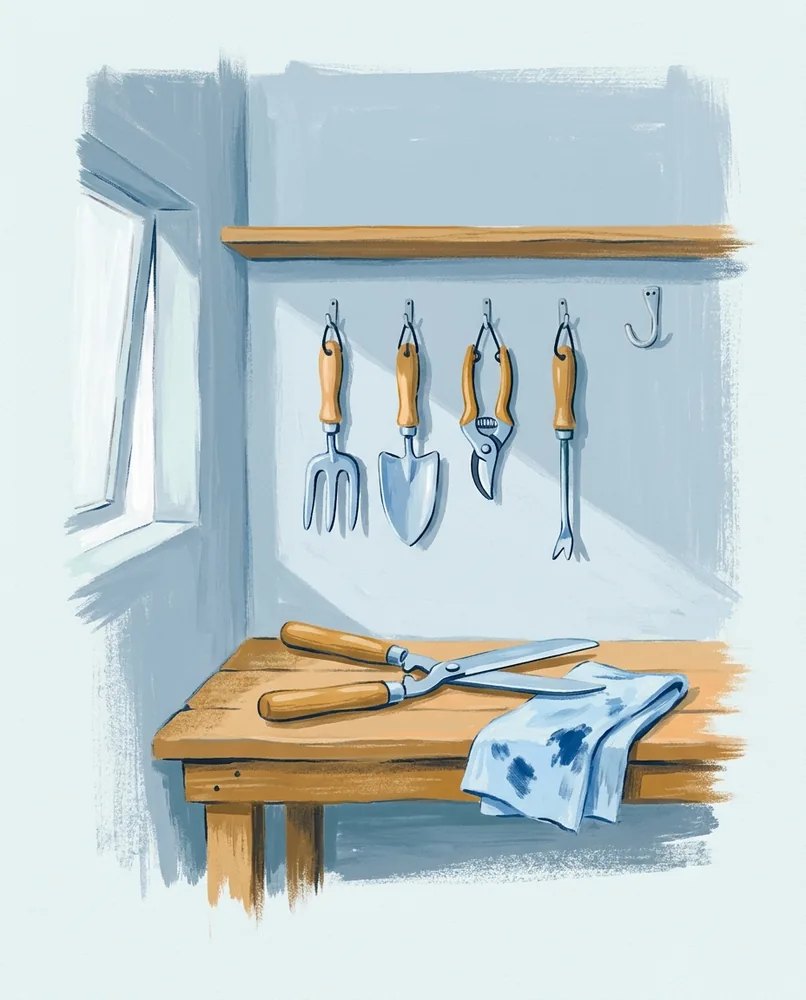
What drives the Keeper
In the back of a pharmacy, a technician counts tablets by fives, records the number, and returns the bottle to its exact place. An hour later, the pharmacist reaches for it without searching. Nothing dramatic happened, and that is the achievement.
Reliable in the details.
Conventional-Realistic interest often shows up as quiet reliability: making the physical world orderly enough that other people can trust it. You may enjoy work where accuracy is visible, useful, and repeatable, not because every day must be identical, but because a well-run process protects people from avoidable mistakes.
At your best
For you, fixing a problem often leads naturally to preventing its return.
The trade-off
Unfinished maintenance may stay mentally present: the job is not complete until the next failure is less likely.
What draws you
This mix often draws you to turning a vague need into a dependable setup. That combination fits work such as pharmacy technology, inventory control, surveying, aviation inspection, equipment maintenance, and logistics, roles where careful handling and accurate records support one another. You often see the hands-on task and the paperwork as one promise: the right thing was done, and there is a clear way to verify it.
About this information
Conventional and Realistic are next to each other on Holland’s hexagon because both are drawn to concrete, practical tasks with clear standards. The difference is what holds your attention. Conventional interest notices sequence, records, and consistency; Realistic interest notices materials, tools, spaces, and how things work in the physical world.
Our take Built on O*NET’s descriptions of the work each interest describes[1]. It sketches a mix of interests, so expect some lines to fit you better than others—and use the activities to see what holds up in practice.
O*NET, the U.S. Department of Labor’s job database, describes Conventional work as “following procedures and regulations to organize information or data, typically in a business setting.” Realistic work involves “designing, building, or repairing of equipment, materials, or structures, engaging in physical activity, or working outdoors”[1].
How the two letters work together
Side by side on the hexagon
Holland arranged the six interests in a hexagon, placing the ones he considered most alike closest together. Your two interests are next-door neighbors, so they share a natural thread. You may be drawn to work that lets you use both without having to choose between them.
- C
Conventional · The Organizer Clear structure, accurate records, data, and systems people can count on.
- R
Realistic · The Doer Practical, hands-on work with tools, machines, plants, or animals.
When strengths overreach
Every strength solves a real problem. When it runs unchecked, the same strength can create a new one. The cards below name the turning point and the cost you may notice.
When the usual steps don’t fit
You rely on clear procedures to keep practical work moving, and an unusual case may feel like an interruption rather than useful information. A damaged delivery, unfamiliar repair, or conflicting instruction can reveal that the usual steps no longer match what is in front of you. You may follow the rule in silence, even as the real purpose gets lost. The cost is a decision that looks orderly on paper while leaving the problem untouched.
Work nobody sees
At your desk or in the stockroom, you may keep counting, labeling, checking, and anticipating until everything runs smoothly. The shelves look orderly, but the work behind that order can disappear from view. Others may assume the system takes care of itself, while you become the person quietly preventing shortages and mistakes. When nobody sees the maintenance, your contribution can seem effortless, and more of the same invisible work can land with you.
Tidying other people’s spaces
When order feels helpful, a coworker’s messy bench may look like an obvious problem to solve. Their arrangement may have a private logic that only becomes clear when a tool or supply is moved. You may put things away to restore a system you can understand, while costing the other person time and concentration. Practical cooperation can become surprisingly intrusive when your preferred order starts taking priority over the way someone else gets work done.
Working across interests
See how a strongest interest in Conventional tends to affect the way you work alongside each of the six interests.
- R
Realistic · The Doer
- Where your styles complement each other
- You keep the plan, records, and supplies in order, and they do the hands-on work.
- Where your styles may pull in different directions
- When the manual says one thing and the machine in front of them says another, you might reach for the manual while they trust the machine.
- I
Investigative · The Thinker
- Where your styles complement each other
- Accurate, organized information is your department. They dig into what it means.
- Where your styles may pull in different directions
- A question might pull them off in a new direction halfway through, just when you’d like to stick to the method everyone agreed on.
- A
Artistic · The Creator
- Where your styles complement each other
- They bring new ideas, and you turn them into a plan with dates and details.
- Where your styles may pull in different directions
- They might want to keep things open well past the point where you’d like it settled and written down.
- S
Social · The Helper
- Where your styles complement each other
- They look after the people. You make sure the promises made to them get kept.
- Where your styles may pull in different directions
- When someone’s paperwork comes in late, they may want to make an exception for that one person. You might already be wondering what that means for everyone else in line.
- E
Enterprising · The Persuader
- Where your styles complement each other
- They open up new plans and deals. You make sure whatever’s agreed gets done and written down.
- Where your styles may pull in different directions
- Their new ideas can add commitments to a system you already run.
- C
Conventional · The Organizer
- Where your styles complement each other
- You both value clear plans, accurate records, and following through.
- Where your styles may pull in different directions
- Two people with their own filing systems may each expect the other to switch.
These interests describe the kinds of work people are drawn to, not how anyone handles closeness or conflict.[2]
With other people
At work
What may feel easy
Every bin labeled, every part logged, and the spare key on its hook. The Keeper may feel most at ease with coworkers who lead with Conventional or Realistic work. They often care about dependable procedures, tangible results, and knowing how a system will hold up after the handoff. You may trust one another because neither treats practical details as beneath attention.
Where friction may show up
People who lead with Artistic or Social work may approach the same workplace from the opposite direction. They may want to try a new layout, adapt the usual rule to a person’s circumstances, or spend time building support before changing the process. You may be tracking consistency and downstream effects; they may be tracking expression or human impact. Your caution can keep an experiment from becoming a mess, but their flexibility may reveal that a system designed for the average case is failing someone in front of you.
What they might bring
New ideas, plus the person who can turn them into something dependable.
When you are much alike
Another Keeper can bring a quieter conflict: each person may assume their own system is the obvious one. You may both be trying to prevent mistakes while making the other person feel controlled.
Research behind this panel
A meta-analysis of work groups found that conflict about each other, or about how the work gets done, went with worse group results, while disagreeing about the task itself was not strongly tied to worse performance[C22]. A team can challenge an idea without attacking a colleague. The distinction becomes harder to maintain when criticism is vague, personal, or tied to status.
People included in the research
Research on teams mixes real workplaces with student project groups, so treat it as a rough guide. A team is also influenced by its manager, incentives, workload, power differences, and whether people have room to work in their own way.
As a friend
What may feel easy
Friends who like a well-stocked garage, a practical project, or a good camping checklist might feel easy. You can enjoy being together without constantly deciding what comes next.
Where friction may show up
A friend who likes to improvise, or who wants a long heart-to-heart before doing anything, might find your plans a little strict. Two Keepers might each bring a first-aid kit, a backup plan, and a strong opinion about the route.
What they might bring
Spontaneity, and a warmer evening.
Research behind this panel
In a study of friendship networks, sharing humor, hobbies and interests, and moral beliefs were among the best predictors of feeling close[C24]. Friends do not need identical personalities. They often need enough shared ground to feel understood, enough room for difference to stay interesting, and enough trust that disagreement does not threaten the bond.
People included in the research
Most friendship studies so far have looked at students. Friendships later in life can carry different pressures, histories, and choices about time, so treat these findings as a starting point rather than a complete picture.
In a relationship
What may feel easy
A partner who likes knowing where the flashlight is during a storm might feel natural. Shared preparation can feel less like restriction and more like a quiet way of taking care of each other.
Where friction may show up
Someone who likes redecorating, changing plans, or filling the house with unexpected guests might strain your system. With a partner just like you, the question may become whose system wins—and whether either of you can leave room for surprise.
What they might bring
Warmth, and a new look for the living room.
Research behind this panel
In one study of couples, feeling grateful toward a partner went with both partners feeling more connected the next day[C16]. Gratitude may matter partly because it makes ordinary contributions visible: the errand, patience, explanation, or small act of consideration that can otherwise disappear into routine.
People included in the research
Most of this research studied married, heterosexual couples in Western countries. One study of the push-pull loop included lesbian and gay couples and found the same link[C12]. Use these findings as useful but incomplete clues, not as a definition of what a relationship should look like.
How a third letter can shade it
A full interest code has three letters. The third is a supporting interest, something to hold on to alongside CR. It may not lead your choices, but it can influence the setting, problems, or people that make the work feel worthwhile.
-
CRICRI
Investigative third
Room to investigate why things work, follow the evidence, and get the facts right before acting.
-
CRACRA
Artistic third
Some room for your own ideas, imagination, and a way of doing things that’s distinctly yours.
-
CRSCRS
Social third
Time spent directly with people, whether that’s teaching, helping, encouraging, or looking after someone.
-
CRECRE
Enterprising third
A chance to lead something, make the case for it, negotiate for support, or move it forward.
Where CR tends to fit
Here are example jobs with this mix of interests, from O*NET[1]. They are possibilities to investigate, not recommendations. A title can fit your interests while the daily setting, training path, pay, or demands do not fit your life. Each link opens the occupation’s page on O*NET OnLine, where you can explore the work in more detail.
- Pharmacy Technicians (opens O*NET OnLine in a new tab)CR
- Meter Readers, Utilities (opens O*NET OnLine in a new tab)CR
- Weighers, Measurers, Checkers, and Samplers, Recordkeeping (opens O*NET OnLine in a new tab)CR
- Transportation Inspectors (opens O*NET OnLine in a new tab)CR
- Office Machine Operators, Except Computer (opens O*NET OnLine in a new tab)CR
- Log Graders and Scalers (opens O*NET OnLine in a new tab)CR
- Data Entry Keyers (opens O*NET OnLine in a new tab)CR
- Mail Clerks and Mail Machine Operators, Except Postal Service (opens O*NET OnLine in a new tab)CR
- Prepress Technicians and Workers (opens O*NET OnLine in a new tab)CR
- Postal Service Mail Sorters, Processors, and Processing Machine Operators (opens O*NET OnLine in a new tab)CR
- Shipping, Receiving, and Inventory Clerks (opens O*NET OnLine in a new tab)CRE
- Stockers and Order Fillers (opens O*NET OnLine in a new tab)CRE
- Aviation Inspectors (opens O*NET OnLine in a new tab)CRI
- Biological Technicians (opens O*NET OnLine in a new tab)CRI
- Computer Numerically Controlled Tool Programmers (opens O*NET OnLine in a new tab)CRI
- Network and Computer Systems Administrators (opens O*NET OnLine in a new tab)CRI
- Occupational Health and Safety Technicians (opens O*NET OnLine in a new tab)CRI
- Energy Auditors (opens O*NET OnLine in a new tab)CRI
- Computer User Support Specialists (opens O*NET OnLine in a new tab)CRI
- Police Identification and Records Officers (opens O*NET OnLine in a new tab)CRI
This page includes information from the O*NET 31.0 Database by the U.S. Department of Labor, Employment and Training Administration (USDOL/ETA). Used under the CC BY 4.0 license. O*NET® is a trademark of USDOL/ETA. Nomigram has modified all or some of this information: scores are rounded and only some fields are kept. USDOL/ETA has not approved, endorsed, or tested these modifications. Credits and licenses
The other Conventional types
All 30 interest types →- CIConventional

The Archivist
Set on getting information right, tracing where it came from, and filing it where people can find it.
- CAConventional

The Editor
Hooked on making creative work fit together, down to the last comma and the feeling it leaves behind.
- CSConventional

The Linchpin
Someone who likes keeping things organized so people get what they need, especially when the situation is busy or unclear.
- CEConventional

The Planner
Likely to have the budget and schedule worked out before the project starts.
Take the Career assessment and find your type
Rate 30 work activities to identify your interest type. Then see what draws or drains you at work, which jobs to explore, and where a strong interest can narrow what you consider.

Questions
What makes two people easy to be around?
Similarity is less powerful than most compatibility charts suggest. In national studies of married couples in three countries, the resemblance between two people’s personalities explained less than half a percent of relationship satisfaction after each person’s own traits were counted[C1]. Two studies of friends found a similar pattern[C5][C6]. Being alike may make recognition easier, but it does not automatically create trust, care, or a workable daily life.
What each person brings mattered more. Warmth, reliability, and staying steady under stress were linked with the other person’s greater satisfaction[C1][C2]. And the relationship people were actively creating mattered most. Across 43 studies that followed couples for between 2 months and 4 years, feeling appreciated by a partner and believing that partner was committed predicted how the relationship was going better than any personality trait did[C3]. A trait may influence a tendency; repeated responses teach the other person what it is safe to expect.
So read what follows as a set of places to look, not a verdict about a bond. Notice what feels natural, what gets misread, and what each person has to learn to make visible. People also change. In long-term studies in two countries, being in a first serious relationship went with becoming calmer over the years[C33][C34]. A relationship is not only a meeting of two finished personalities; it is also an environment in which habits can strengthen or soften.
Can this tell whether two people will get along?
No. Assessments cannot yet predict whether two people will get along, fall for each other, or last. In two speed-dating studies, more than 100 answers given beforehand could not predict who would be drawn to whom in particular[C7]. A report can offer language for a conversation, but it cannot account for timing, shared circumstances, attraction, repair after conflict, or the many small choices that make someone feel valued.
Can I read this about someone I know?
You can, but treat it as a set of possibilities rather than a description you can assign from a distance. A type page describes a mix of scores, and the person may experience that mix differently from how it looks to you. Ask what fits, what does not, and what you may have been interpreting too quickly.
Where does this come from?
The numbered sources match the table on our method page. The personality statements come from the public-domain International Personality Item Pool, and the percentiles compare your answers with a published open data set of several hundred thousand people. The ones marked C are the studies behind “With other people.”
- 1 O*NET OnLine, U.S. Department of Labor. Career interest definitions and occupation interest codes.
- 2 Nauta, M. M. (2010). The development, evolution, and status of Holland’s theory of vocational personalities. Journal of Counseling Psychology, 57(1), 11–22.
- 6 Nye, C. D., Su, R., Rounds, J., & Drasgow, F. (2017). Interest congruence and performance: Revisiting recent meta-analytic findings. Journal of Vocational Behavior, 98, 138–151.
- 8 Hoff, K. A., Song, Q. C., Wee, C. J. M., Phan, W. M. J., & Rounds, J. (2020). Interest fit and job satisfaction: A systematic review and meta-analysis. Journal of Vocational Behavior, 123, 103503.
- C1 Dyrenforth, Kashy, Donnellan & Lucas (2010). Journal of Personality and Social Psychology 99(4), 690–702. Abstract only DOI
- C2 Malouff et al. (2010). Journal of Research in Personality 44(1), 124–127. Abstract only DOI
- C3 Joel et al. (2020). Proceedings of the National Academy of Sciences 117(32), 19061–19071. Read the full article DOI
- C5 Yang et al. (2026). Social Psychological and Personality Science. Abstract only DOI
- C6 Körner & Altmann (2023). Journal of Research in Personality 107, 104436. Abstract only DOI
- C7 Joel, Eastwick & Finkel (2017). Psychological Science 28(10). Abstract only DOI
- C12 Baucom, McFarland & Christensen (2010). Journal of Family Psychology 24(3), 233–242. Abstract only DOI
- C16 Algoe, Gable & Maisel (2010). Personal Relationships 17(2), 217–233. Abstract only DOI
- C22 de Wit, Greer & Jehn (2012). Journal of Applied Psychology 97(2), 360–390. Abstract only DOI
- C24 Curry & Dunbar (2013). Human Nature 24(3), 336–347. Abstract only DOI
- C33 Neyer & Asendorpf (2001). Journal of Personality and Social Psychology 81(6). Abstract only DOI
- C34 Lehnart, Neyer & Eccles (2010). Journal of Personality 78(2). Abstract only DOI