
Types / Interest types / Social · The Helper
SSocial interest · The Helper
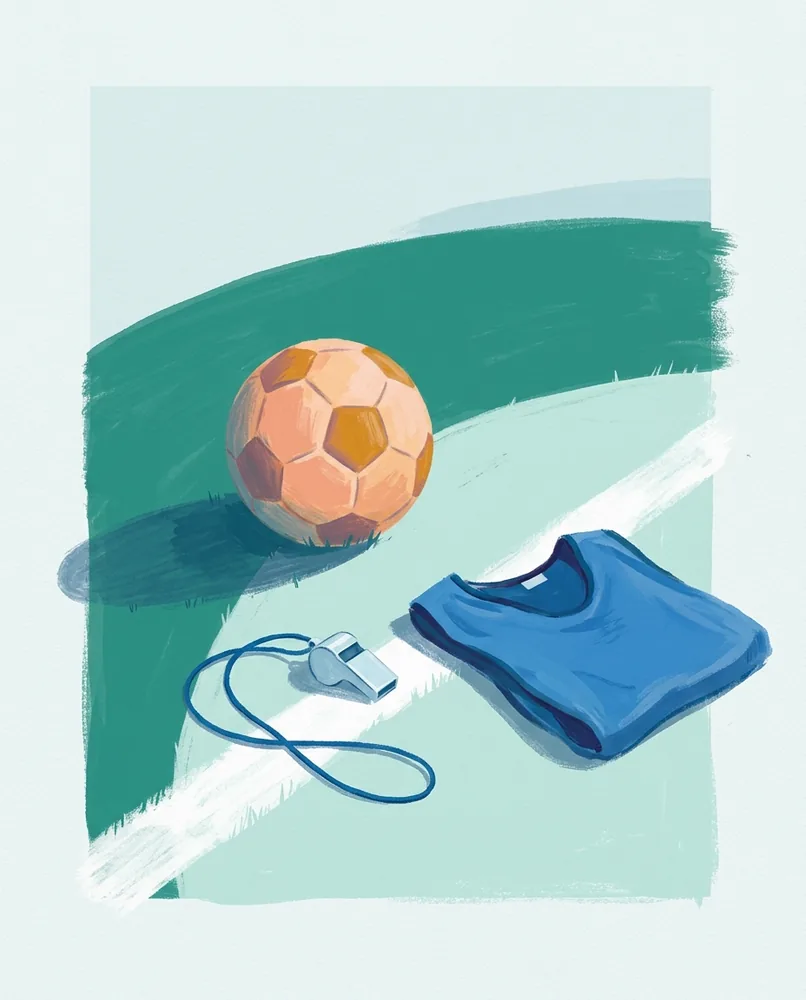
The Coach.
Big on helping people—and on finding the spark that gets them moving.
Social first, Enterprising second.
What drives the Coach
At work, someone mentions that the local food pantry is short on volunteers. By Saturday, one person has a sign-up sheet going around, rides lined up, and enough people assigned to each shift. That’s the Coach.
Care needs a plan and people.
You care about the people who need help, but care becomes real to you when it takes form: a plan, a team, and a next step someone can count on. You are rarely satisfied with sympathy that leaves the same problem there. Your instinct is to gather energy, give it direction, and make it easier for other people to contribute.
At your best
You can make people feel supported while also making the support more organized and durable.
The trade-off
People may experience your helpful plan as pressure if you move to mobilize them before they have said what they want.
What draws you
You often do not want to choose between helping one person and changing the conditions around them. You want to understand the human need and then do something effective about it.
How care gets wider
Someone who’s mostly Social might spend time with one person and talk them through a rough week. You’d probably do that too. You’re just as likely to ask who controls the budget, what approval is needed, or which people could help more families get that kind of support.
Where influence helps
Your kind of work tends to be one where looking after people and running something come as a package. You are often drawn to roles in community programs, education, advocacy, fundraising, recruiting, public service, or team leadership, not because you want authority for its own sake, but because influence gives your care reach.
About this information
The six interests are often arranged with the most similar ones side by side on the hexagon. Social and Enterprising are one of those pairs. Both are about working with people, but they move toward different forms of impact. The first begins with a person’s needs, growth, or well-being. The second adds influence: persuading people, organizing resources, making decisions, and turning support into a larger effort.
Our take Built on O*NET’s descriptions of the work each interest describes[1]. It sketches a mix of interests, so expect some lines to fit you better than others—and use the activities to see what holds up in practice.
O*NET, the U.S. Department of Labor’s job database, says Social work involves “helping, teaching, advising, assisting, or providing service to others.” For Enterprising work, it lists “managing, negotiating, marketing… or leading…”[1].
How the two letters work together
Side by side on the hexagon
Holland arranged the six interests in a hexagon, placing the ones he considered most alike closest together. Your two interests are next-door neighbors, so they share a natural thread. You may be drawn to work that lets you use both without having to choose between them.
- S
Social · The Helper Teaching, advising, caring for, and working alongside other people.
- E
Enterprising · The Persuader Leading, influencing, persuading, and getting new ventures off the ground.
When strengths overreach
Every strength solves a real problem. When it runs unchecked, the same strength can create a new one. The cards below name the turning point and the cost you may notice.
Taking on problems that aren’t yours
You care about people and move quickly when something needs organizing. A coworker’s scheduling mess or a friend’s standoff with a landlord may land on your plate before you have agreed to take it. Because you tend to turn concern into action, people may begin treating your capacity as a shared resource. Your intervention can bring order while leaving the other person less involved in their own problem. You may also discover that helping by choice has quietly become rescuing by habit.
Putting off the call someone won’t like
At a meeting where a decision will disappoint someone, you may keep gathering input because bringing everyone along matters to you. That care can turn into delay after the information needed to decide is already clear. People then plan around an answer that does not exist, and the eventual change may feel more abrupt than it needed to. You may experience the waiting as compassion, while others experience it as indefinite hope with no reliable date attached.
Running out of steam
When getting people moving gives you energy, you may look fine while a Saturday fundraiser becomes a Monday planning session and another event fills the calendar. Your motivation can return whenever someone needs something, so exhaustion may not feel like a reason to stop. By Wednesday, your patience and judgment may be thinner even as your schedule looks productive. The people you want to help then receive your effort without the steadiness that made your leadership reassuring in the first place.
Working across interests
See how a strongest interest in Social tends to affect the way you work alongside each of the six interests.
- R
Realistic · The Doer
- Where your styles complement each other
- They may build and fix the thing, while you may keep the people it is for in mind.
- Where your styles may pull in different directions
- You may want to talk it through when they’d rather get started and adjust as they go.
- I
Investigative · The Thinker
- Where your styles complement each other
- They may check whether an idea holds up, while you may think about how it will land with the people it affects.
- Where your styles may pull in different directions
- When someone needs help now, you might be ready to act before they’re sure it’s the right move.
- A
Artistic · The Creator
- Where your styles complement each other
- They may bring the original idea, while you may think about the people it is for.
- Where your styles may pull in different directions
- Your focus on what people need from it can feel like a box around their idea.
- S
Social · The Helper
- Where your styles complement each other
- You both put the people first.
- Where your styles may pull in different directions
- Two people looking after everyone can leave the hard decision unmade.
- E
Enterprising · The Persuader
- Where your styles complement each other
- They may get things moving, while you may make sure the people involved are looked after.
- Where your styles may pull in different directions
- You might be asking how everyone’s holding up while they want to know whether you hit the number.
- C
Conventional · The Organizer
- Where your styles complement each other
- They keep the promises you make to people on track.
- Where your styles may pull in different directions
- Saying yes to people who need help can add commitments to a system they already run.
These interests describe the kinds of work people are drawn to, not how anyone handles closeness or conflict.[2]
With other people
At work
What may feel easy
People whose work also centers on people tend to care about the same parts of a job you do. Another Coach, or someone who leads with Social or Enterprising work, probably will not need convincing that the volunteer schedule matters, that a hesitant person needs encouragement, or that somebody should own the follow-up. You can turn concern for people into movement without losing sight of either one.
Where friction may show up
Realistic sits across the hexagon from Social, and Investigative sits across from Enterprising. People who lead with that work may want something else from the same day. You may be asking how everyone is holding up and be ready to move, while they want to see the evidence, test the assumption, or start building. Their standard protects durability; yours protects people and momentum. Translate the purpose in both directions: show how the human goal depends on sound work, and how the sound work will help someone.
What they might bring
The check that an idea actually works, plus the people skills and hands to put it into practice.
When you are much alike
Someone just like you brings a cost of the same strength. Two people used to organizing everyone may each assume they are running the work, or both avoid making the call that could disappoint somebody.
Research behind this panel
A meta-analysis of work groups found that conflict about each other, or about how the work gets done, went with worse group results, while disagreeing about the task itself was not strongly tied to worse performance[C22]. A team can challenge an idea without attacking a colleague. The distinction becomes harder to maintain when criticism is vague, personal, or tied to status.
People included in the research
Research on teams mixes real workplaces with student project groups, so treat it as a rough guide. A team is also influenced by its manager, incentives, workload, power differences, and whether people have room to work in their own way.
As a friend
What may feel easy
Friends who would rather do things with people may feel easy, like the friend who helps run the block party and then invites everyone over for pizza. You bring energy, coordination, and a reason to turn an ordinary weekend into shared life rather than parallel errands.
Where friction may show up
A friend who would rather spend Saturday fixing a bike or reading up on something may not share your excitement about the block party. You may keep inviting them because inclusion feels like care, while they keep saying maybe because a crowd feels like work. Two Coaches can create a different snag: each assumes the other is organizing the next one.
What they might bring
Unhurried one-on-one time, a reason to gather, and a friend who can fix your bike.
Research behind this panel
In two studies of new acquaintances, more hours together went with growing closer, and leisure time together went with closeness too[C23]. Familiarity creates opportunities for trust, but time alone is not magic: repeated contact is more likely to help when people feel welcomed rather than trapped, evaluated, or ignored.
People included in the research
Most friendship studies so far have looked at students. Friendships later in life can carry different pressures, histories, and choices about time, so treat these findings as a starting point rather than a complete picture.
In a relationship
What may feel easy
Someone who likes evenings full of people and plans may feel natural to you. You can build a shared life through invitations, causes, celebrations, and the small satisfaction of making something happen together.
Where friction may show up
A partner whose free time goes to a workbench, a book, or a stack of articles may not want the third event of the month. You might hear “not this time” as indifference to something that matters, while they may simply be protecting a quiet project or a little room to think. Two people with your pace can also keep adding plans until neither of you has time to recover.
What they might bring
A quieter pace—and someone who asks whether the plan will actually work before you both sign up.
Research behind this panel
In a set of studies on couples, responding with real enthusiasm when a partner shared good news went with closer relationships[C15]. Support is not only comfort during a hard day. It is also joining someone in a moment of pride, relief, or excitement instead of minimizing it, redirecting attention, or treating their success as ordinary.
In one study of married couples, whether time together went with satisfaction depended on doing things both partners liked[C25]. Being together is not automatically nourishing. Shared time works better when neither person is consistently performing the other’s idea of fun, and when both can sometimes choose the activity.
People included in the research
Most of this research studied married, heterosexual couples in Western countries. One study of the push-pull loop included lesbian and gay couples and found the same link[C12]. Use these findings as useful but incomplete clues, not as a definition of what a relationship should look like.
How a third letter can shade it
A full interest code has three letters. The third is a supporting interest, something to hold on to alongside SE. It may not lead your choices, but it can influence the setting, problems, or people that make the work feel worthwhile.
-
SERSER
Realistic third
Hands-on, practical, or outdoor work—and something tangible to show for it when you’re done.
-
SEISEI
Investigative third
Room to investigate why things work, follow the evidence, and get the facts right before acting.
-
SEASEA
Artistic third
Some room for your own ideas, imagination, and a way of doing things that’s distinctly yours.
-
SECSEC
Conventional third
Clear plans, tidy systems, and dependable follow-through, so everyone knows what’s happening and who’s doing what.
Where SE tends to fit
Here are example jobs with this mix of interests, from O*NET[1]. They are possibilities to investigate, not recommendations. A title can fit your interests while the daily setting, training path, pay, or demands do not fit your life. Each link opens the occupation’s page on O*NET OnLine, where you can explore the work in more detail.
- Education and Childcare Administrators, Preschool and Daycare (opens O*NET OnLine in a new tab)SEC
- Education Administrators, Kindergarten through Secondary (opens O*NET OnLine in a new tab)SEC
- Education Administrators, Postsecondary (opens O*NET OnLine in a new tab)SEC
- Instructional Coordinators (opens O*NET OnLine in a new tab)SEI
- Coaches and Scouts (opens O*NET OnLine in a new tab)SER
- Concierges (opens O*NET OnLine in a new tab)SEC
- Hosts and Hostesses, Restaurant, Lounge, and Coffee Shop (opens O*NET OnLine in a new tab)SEC
- Recreation Workers (opens O*NET OnLine in a new tab)SER
- Travel Guides (opens O*NET OnLine in a new tab)SEC
This page includes information from the O*NET 31.0 Database by the U.S. Department of Labor, Employment and Training Administration (USDOL/ETA). Used under the CC BY 4.0 license. O*NET® is a trademark of USDOL/ETA. Nomigram has modified all or some of this information: scores are rounded and only some fields are kept. USDOL/ETA has not approved, endorsed, or tested these modifications. Credits and licenses
The other Social types
All 30 interest types →- SRSocial
The Medic
Quick to notice what needs doing—and willing to help in a way people can feel.
- SISocial

The Guide
Inclined to ask what is really wrong before deciding how to help.
- SASocial

The Encourager
Full of ways to help that involve imagination, expression, and a little play.
- SCSocial

The Steward
The one who looks after people by making sure nothing slips through the cracks.
Take the Career assessment and find your type
Rate 30 work activities to identify your interest type. Then see what draws or drains you at work, which jobs to explore, and where a strong interest can narrow what you consider.

Questions
What makes two people easy to be around?
Similarity is less powerful than most compatibility charts suggest. In national studies of married couples in three countries, the resemblance between two people’s personalities explained less than half a percent of relationship satisfaction after each person’s own traits were counted[C1]. Two studies of friends found a similar pattern[C5][C6]. Being alike may make recognition easier, but it does not automatically create trust, care, or a workable daily life.
What each person brings mattered more. Warmth, reliability, and staying steady under stress were linked with the other person’s greater satisfaction[C1][C2]. And the relationship people were actively creating mattered most. Across 43 studies that followed couples for between 2 months and 4 years, feeling appreciated by a partner and believing that partner was committed predicted how the relationship was going better than any personality trait did[C3]. A trait may influence a tendency; repeated responses teach the other person what it is safe to expect.
So read what follows as a set of places to look, not a verdict about a bond. Notice what feels natural, what gets misread, and what each person has to learn to make visible. People also change. In long-term studies in two countries, being in a first serious relationship went with becoming calmer over the years[C33][C34]. A relationship is not only a meeting of two finished personalities; it is also an environment in which habits can strengthen or soften.
Can this tell whether two people will get along?
No. Assessments cannot yet predict whether two people will get along, fall for each other, or last. In two speed-dating studies, more than 100 answers given beforehand could not predict who would be drawn to whom in particular[C7]. A report can offer language for a conversation, but it cannot account for timing, shared circumstances, attraction, repair after conflict, or the many small choices that make someone feel valued.
Can I read this about someone I know?
You can, but treat it as a set of possibilities rather than a description you can assign from a distance. A type page describes a mix of scores, and the person may experience that mix differently from how it looks to you. Ask what fits, what does not, and what you may have been interpreting too quickly.
Where does this come from?
The numbered sources match the table on our method page. The personality statements come from the public-domain International Personality Item Pool, and the percentiles compare your answers with a published open data set of several hundred thousand people. The ones marked C are the studies behind “With other people.”
- 1 O*NET OnLine, U.S. Department of Labor. Career interest definitions and occupation interest codes.
- 2 Nauta, M. M. (2010). The development, evolution, and status of Holland’s theory of vocational personalities. Journal of Counseling Psychology, 57(1), 11–22.
- 6 Nye, C. D., Su, R., Rounds, J., & Drasgow, F. (2017). Interest congruence and performance: Revisiting recent meta-analytic findings. Journal of Vocational Behavior, 98, 138–151.
- 8 Hoff, K. A., Song, Q. C., Wee, C. J. M., Phan, W. M. J., & Rounds, J. (2020). Interest fit and job satisfaction: A systematic review and meta-analysis. Journal of Vocational Behavior, 123, 103503.
- C1 Dyrenforth, Kashy, Donnellan & Lucas (2010). Journal of Personality and Social Psychology 99(4), 690–702. Abstract only DOI
- C2 Malouff et al. (2010). Journal of Research in Personality 44(1), 124–127. Abstract only DOI
- C3 Joel et al. (2020). Proceedings of the National Academy of Sciences 117(32), 19061–19071. Read the full article DOI
- C5 Yang et al. (2026). Social Psychological and Personality Science. Abstract only DOI
- C6 Körner & Altmann (2023). Journal of Research in Personality 107, 104436. Abstract only DOI
- C7 Joel, Eastwick & Finkel (2017). Psychological Science 28(10). Abstract only DOI
- C12 Baucom, McFarland & Christensen (2010). Journal of Family Psychology 24(3), 233–242. Abstract only DOI
- C15 Gable, Reis, Impett & Asher (2004). Journal of Personality and Social Psychology 87(2), 228–245. Abstract only DOI
- C22 de Wit, Greer & Jehn (2012). Journal of Applied Psychology 97(2), 360–390. Abstract only DOI
- C23 Hall (2019). Journal of Social and Personal Relationships 36(4), 1278–1296. Abstract only DOI
- C25 Crawford, Houts, Huston & George (2002). Journal of Marriage and Family 64(2), 433–449. Abstract only DOI
- C33 Neyer & Asendorpf (2001). Journal of Personality and Social Psychology 81(6). Abstract only DOI
- C34 Lehnart, Neyer & Eccles (2010). Journal of Personality 78(2). Abstract only DOI