
Stress does not always arrive as too much to do. For many ENTJ people, it arrives as too little agency: plans without owners, effort without progress, or important decisions trapped in someone else’s delay. A full week can feel energizing when it contains challenge and movement, while an apparently easy week can become strangely exhausting when nothing worthwhile is happening. Understanding that difference can help you recover before frustration turns into command mode.
What drains them
1/4Read
When nobody is steering

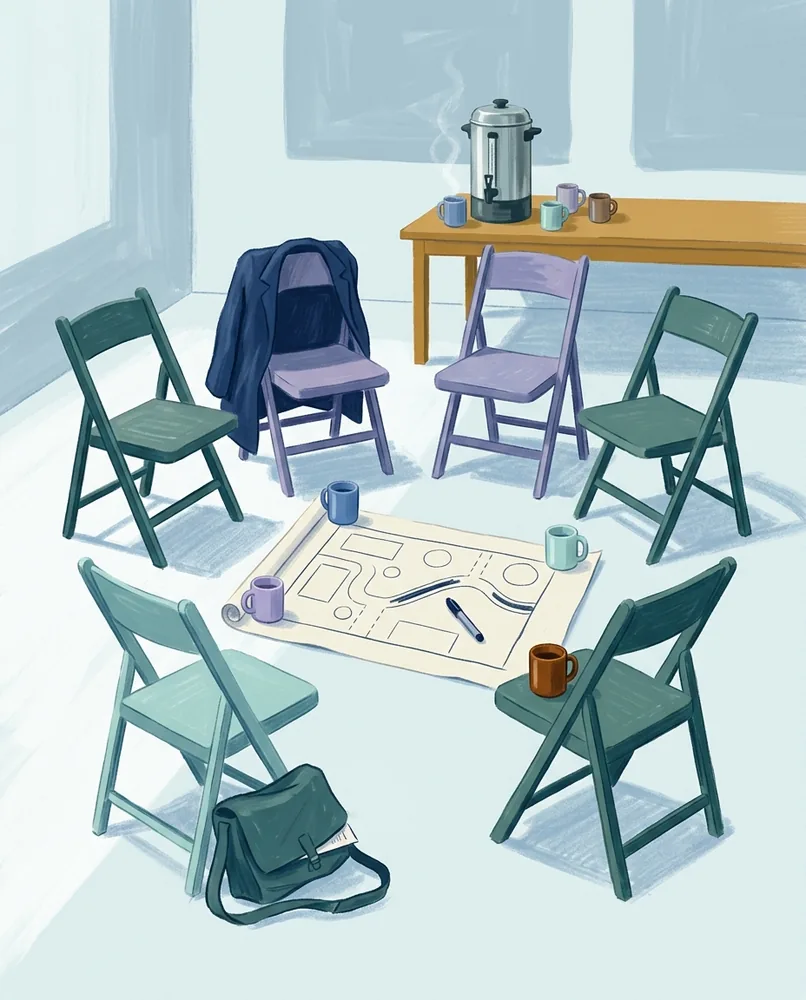
Chaos with nobody steering can be more draining than hard work. A project where no one owns the next step, a trip where every morning begins with “What do you all want to do?” and nobody answers, or a family schedule that changes by the hour can pull ENTJs into constant correction.
They may spend more energy trying to create a workable structure than doing the work itself. Their intention is to make things easier for everyone; other people may experience their growing involvement as pressure or control.
When solitude goes too far
Too much unchosen solitude can wear ENTJs down as well. A long stretch of working from home with no real conversation, or time in a new place before they know anyone, may leave them flat even if the quiet sounded appealing at first.
They often refuel through exchange: quick thinking, direct conversation, shared plans, and the feeling that something is happening between people. When that contact disappears, their mind may keep producing plans, but the plans do not feel as alive.
Why sameness creates friction

Sameness can become its own kind of friction. The same report every Monday, the same social routine every Friday, or the same conversation circling the same unresolved issue may make ENTJs restless. Starting something new can feel like relief because it restores possibility and gives their energy somewhere to go.
The cost is that they may mistake novelty for a solution, abandoning a worthwhile path just when patience, maintenance, or repetition is needed to make it work.
When waiting feels blocked
Waiting is especially difficult for ENTJs when the outcome matters and the next move is not theirs. A decision stuck in someone else’s inbox, a group that will not commit to a date, or a process that keeps requesting information without producing an answer can feel like a blockade.
They may push for a decision simply to restore movement, even when the best decision would benefit from more time. Before escalating, they can ask whether they are solving the problem or trying to end the feeling of being unable to act.
Part of the Personality Type reportThe rest of this chapter is in the Personality Type report
The Captain may recover faster from demanding work than from stalled decisions, unclear ownership, or effort with no visible progress.
The Personality Type report gives you the whole guide to your own type, read alongside your own results, so you can see how your patterns affect work, relationships, and daily decisions.
Free interpretation of your answers when you sign in The full report is $30.
