
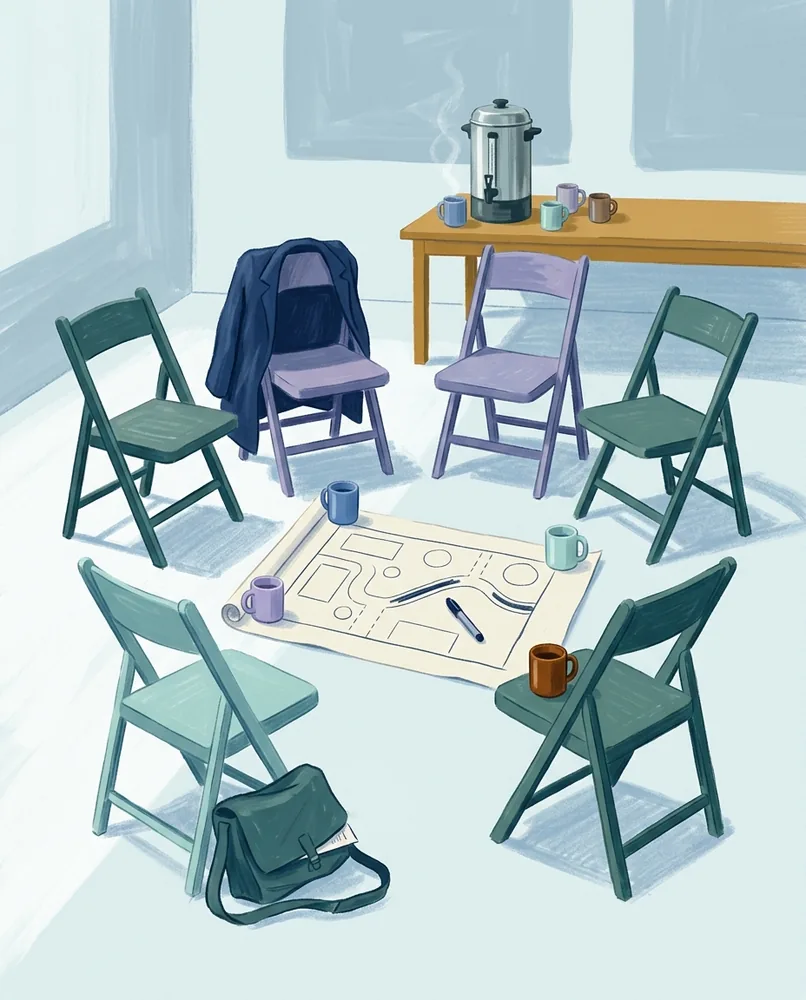
When a plan begins to wobble, The Captain often looks for the point where action can restore control. They may call the meeting, define the decision, assign the next steps, and ask what would have to be true for the project to succeed. Work can feel most satisfying when a vague ambition becomes a coordinated effort with a visible result.
That instinct can be a gift to a distracted team. It can also create a gap between what they intend and what other people experience. They may be trying to create momentum; a colleague may feel hurried. They may be testing an idea; someone else may hear a verdict. They may be protecting a standard; the person doing the work may feel that ownership has quietly been taken away.
The useful question is not whether they should become less driven. It is how to make their drive easier for other people to work with. The strongest version of this type does not merely move work forward. It makes the direction clear, gives people real room to contribute, and treats information from others as an advantage rather than an interruption.
As a colleague
1/4Read
How they create clarity

Their messages probably get to the point: the decision needed, the owner, the date, and the next step. When a conversation circles without reaching a conclusion, they may be the person who turns it into a call or writes, “Here is what I think we should do.”
This can feel clarifying to coworkers who are waiting for structure. It can feel abrupt to people who are still discovering what they think through the discussion itself.
When speed closes discussion
They may also speak early, not because they have stopped listening, but because saying a rough idea aloud helps them develop it. Once the direction is visible, they can ask better questions and improve the plan in public.
Near the end of a meeting, “So what did we decide?” may be their way of protecting the group from leaving with five private interpretations. The cost is that their fluency can make the room seem more settled than it is. A quieter colleague may still have the objection that matters most, but not the opening to offer it.
How deadlines create pressure
Deadlines tend to feel like promises to them, not optimistic guesses. They may create earlier checkpoints, notice dependencies before they become emergencies, and become especially frustrated when someone else’s delay turns their well-organized work into a scramble. The same reliability can become pressure when they assume that everyone sees urgency the way they do.
Some people need more context before committing; others are protecting quality, managing an unseen constraint, or interpreting “Friday” as the point to begin review rather than the point to finish.
What should stay unoptimized

Even informal moments can become opportunities to improve the system. A quiet team lunch might become a useful knowledge-sharing ritual, or a recurring frustration might become a process they redesign. That energy can give a workplace purpose beyond completing assigned tasks.
But not every empty space is an inefficiency. A colleague may value a conversation precisely because it has no deliverable. Leaving some moments unoptimized can be a way of making room for trust, recovery, and relationships that later make collaboration easier.
Part of the Personality Type reportThe rest of this chapter is in the Personality Type report
When progress stalls, The Captain creates direction and momentum, yet decisive pressure may leave colleagues feeling hurried or unheard.
The Personality Type report gives you the whole guide to your own type, read alongside your own results, so you can see how your patterns affect work, relationships, and daily decisions.
Free interpretation of your answers when you sign in The full report is $30.
