

It’s 8:15, the lights are supposed to be out, and a small voice from the top bunk asks where people go when they die. An INFJ may feel two pulls at once: delight that their child is asking a question worth exploring, and frustration that bedtime has already gone off course. Parenting with these letters often means learning to protect both meaning and structure. The conversation matters. So does sleep. Neither has to win every night.
The home they build
1/3Read
The structure beneath meaning
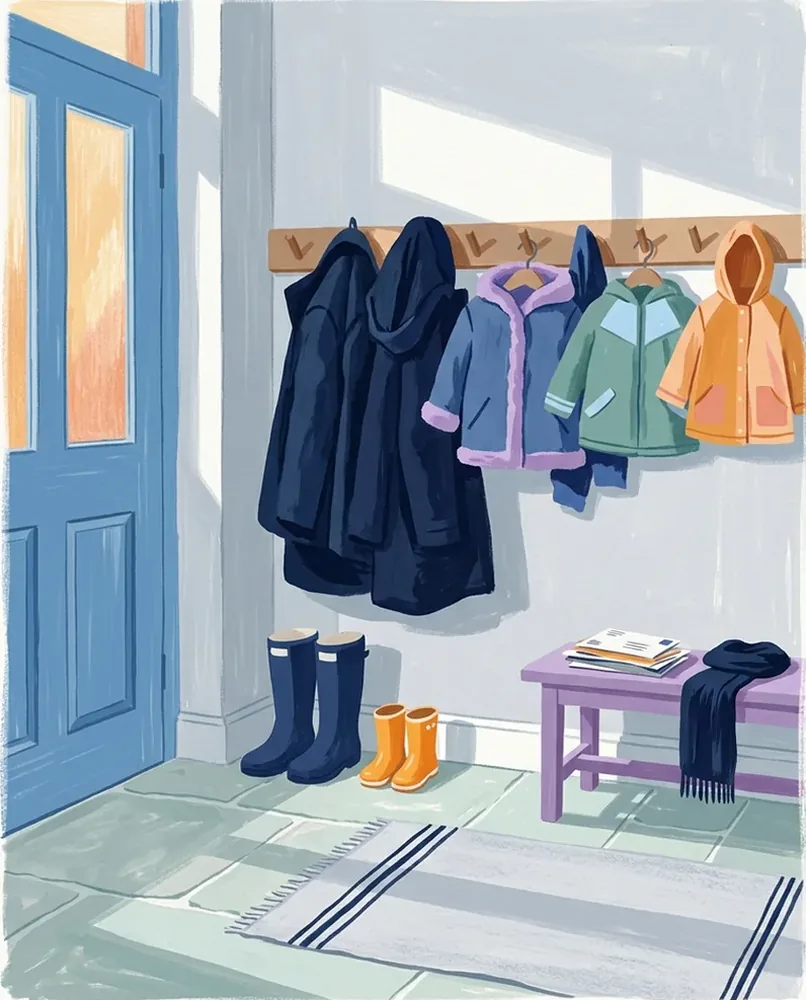
INFJs may want their home to have a frame: bedtime holds, dinner happens at a recognizable hour, and important promises are kept. But the frame is usually not the point. It creates room for what they value inside it—the long conversation in the car, the quiet check-in after a hard day, the feeling that everyone belongs somewhere safe.
Making inner life visible

An INFJ may be the parent who asks for the best and hardest part of the day and waits for the real answer. In their home, feelings may get names, books may pile up, and ordinary events may become openings into questions about fairness, courage, loyalty, or who gets left out.
They are not only raising a child who can behave. They are trying to help a person understand an inner life and use it well.
That long view can make their guidance unusually purposeful. They may choose a consequence not only to stop today’s behavior, but to teach the adult habit underneath it: apologizing, telling the truth, noticing another person’s experience, or taking responsibility when no one is watching. Their warmth helps a child understand why the rule exists. Their structure helps the rule remain real when the explanation does not land.
When care becomes pressure
The same qualities can create pressure. They may notice a child’s mood, a sibling’s exclusion, and the tension between adults before anyone says a word. Because they see so many possible meanings, ordinary behavior can start to look like evidence of a deeper problem. A bad mood may just be tiredness. A slammed door may be a slammed door, not a sign that their relationship is failing.
Before they begin repairing the whole emotional climate, they can ask what actually belongs to them. Their standards may also be difficult for family members to decode. They might believe that their effort, tone, or repeated hints have made a need obvious while everyone else is still guessing.
Directly naming the expectation is often kinder than waiting for people to infer it. They can say what the household agreement is, what they need, and what will happen next. Care becomes easier to receive when it is not hidden inside intuition.
Part of the Personality Type reportThe rest of this chapter is in the Personality Type report
The Beacon often tries to honor a child’s big questions without letting reflection crowd out sleep, limits, and the steadiness children need.
The Personality Type report gives you the whole guide to your own type, read alongside your own results, so you can see how your patterns affect work, relationships, and daily decisions.
Free interpretation of your answers when you sign in The full report is $30.
