
“Why is the sky blue?” In some kitchens, that earns a quick answer. In theirs, it might lead to a flashlight, a glass of water with a splash of milk, and the lights switched off while dinner gets a little late. If an INTP is raising a child, questions may be one of their favorite parts of the job. They can respect a young mind without needing to simplify the world for it. The harder lesson is that children also need forms of care that are less interesting: a snack before the meltdown, a form signed on time, a hug that does not explain anything, and a parent who can make the same dependable choice again tomorrow.
The home they build
1/4Read
A home built on questions

Their home may run on questions. “Why?” is likely to receive a real answer or an invitation to investigate, and a child who asks unusual questions may find them leaning in rather than shutting them down. They can make difference feel safe because they are often more interested in whether an idea is interesting than whether it is conventional.
A child may learn that confusion is not failure; it is the beginning of understanding.
Rules that still stand

They may want rules to make sense before they enforce them. Explaining why bedtime matters can feel more respectful than asking for obedience without context, and a thoughtful child may benefit from that explanation. But a child can also use a good question to postpone an unwanted transition.
The intention is to teach reasoning; the experience may be an adult who keeps reopening a decision. Sometimes the kindest answer is to acknowledge that the question is fair, keep the rule in place tonight, and leave discussion for tomorrow.
Structure without rigidity

The cost of flexibility is easiest to miss in ordinary logistics. Dinner may happen when someone remembers they are hungry, weekends may remain open, and a permission slip may be signed in the car. That freedom can give a child room to follow curiosity and develop initiative.
It can also make the world feel unpredictable, especially to a child who depends on knowing what comes next. A visible calendar, a short morning check-in, and a few nonnegotiable routines can provide structure without turning the home into a timetable.
Making closeness visible
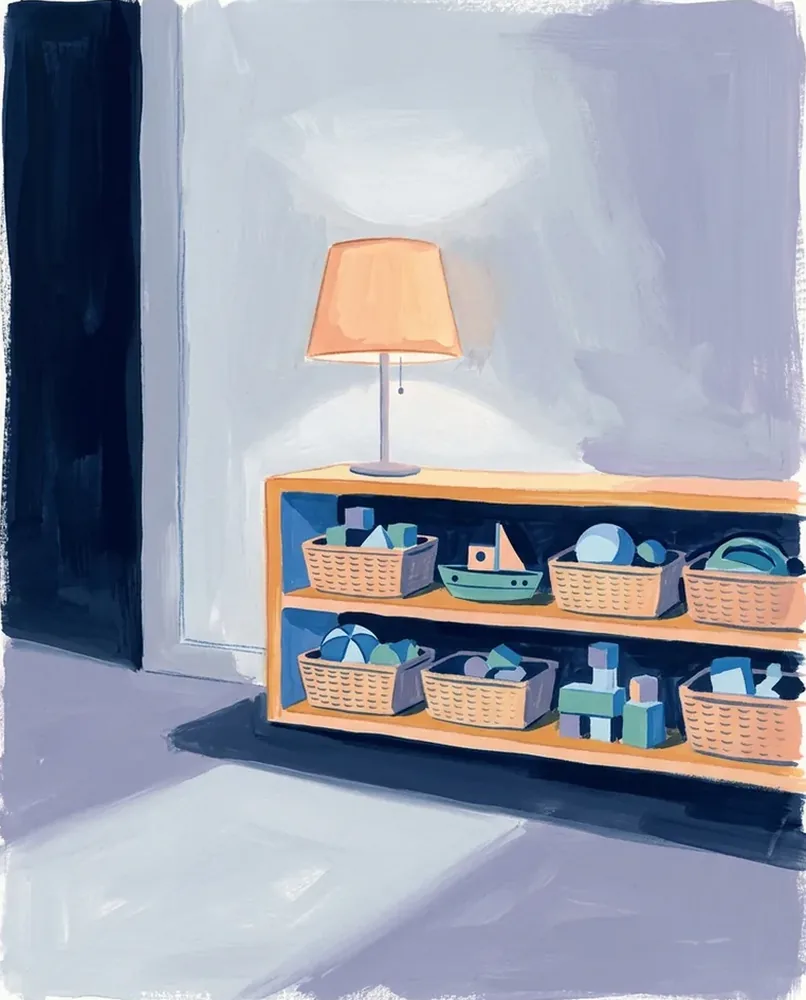
Quiet may be one of the ways their family feels close. Everyone reading in a different corner, building something alone, or sharing a room without constant conversation can feel peaceful rather than distant. Still, children do not always interpret quiet as belonging.
Some need affection made visible: a greeting when they enter, a question about the day, a few minutes of undivided attention. They may feel that their steady presence is obvious. To them, it may need to be stated and shown.
The strength they bring is intellectual respect: they are less likely to dismiss a child’s question simply because it is inconvenient or strange. The blind spot is assuming that understanding the reason for a behavior will automatically change it. Children need explanations, but they also need repetition, limits, comfort, and follow-through.
A useful test is to ask what the moment requires before deciding what it means. Is this a teaching moment, a safety issue, a tired child, or simply a transition that must happen? The answer may call for a theory—or for shoes, water, and a calm “we’re leaving now.”
Part of the Personality Type reportThe rest of this chapter is in the Personality Type report
For The Scholar, a child’s question can open a fascinating trail, while daily care asks for repetition, reliability, and comfort without explanation.
The Personality Type report gives you the whole guide to your own type, read alongside your own results, so you can see how your patterns affect work, relationships, and daily decisions.
Free interpretation of your answers when you sign in The full report is $30.