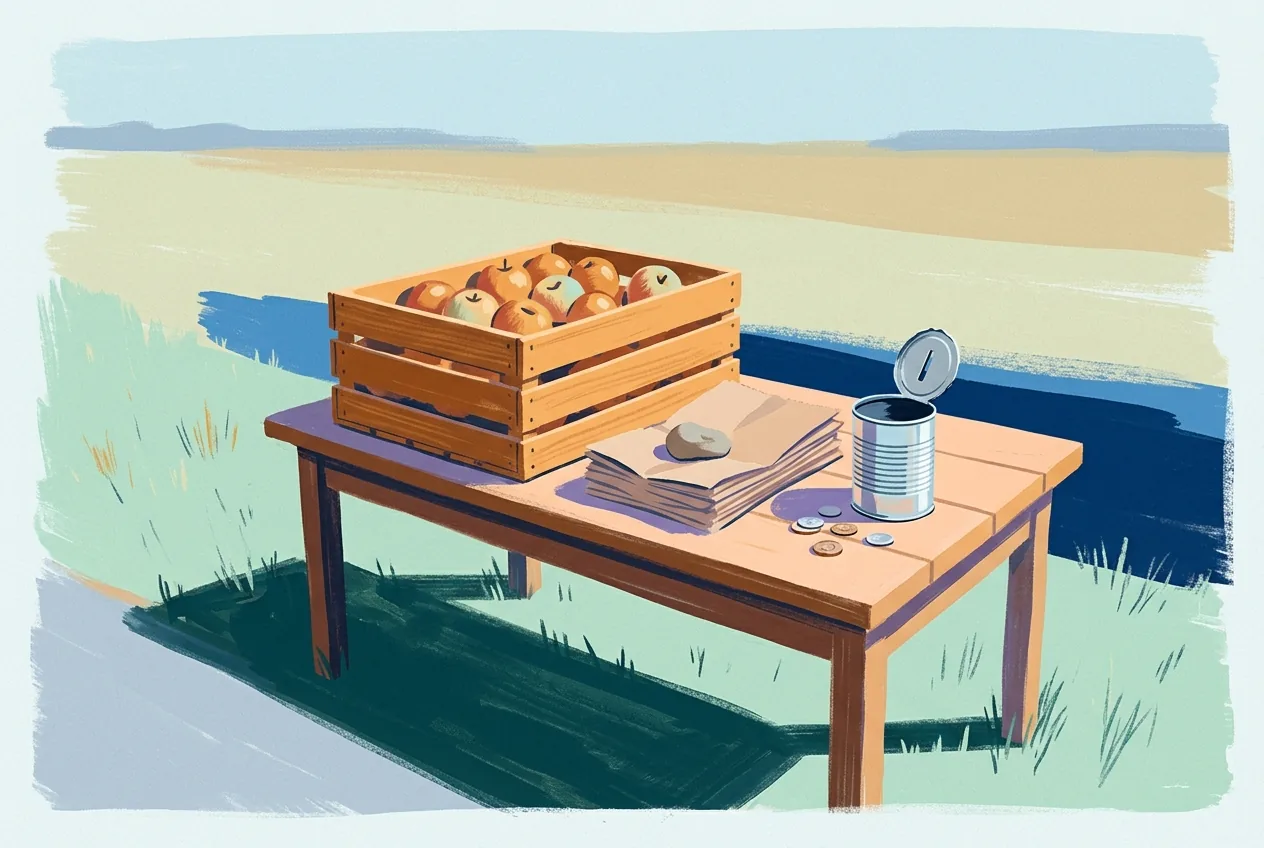
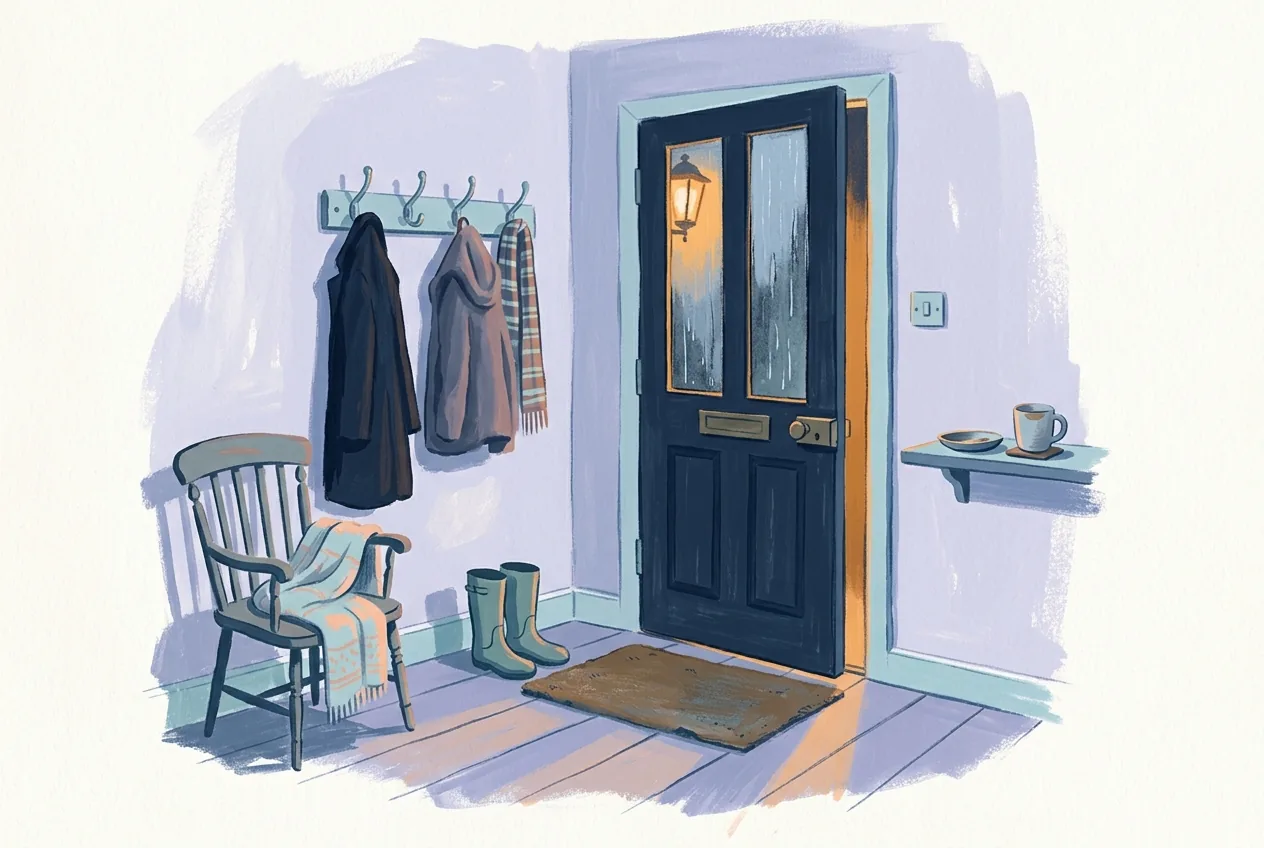
People answering toward this end often prefer quiet settings, private recovery, and a smaller circle of interaction. They can give sustained attention without needing a lively room around them, though too much solitude can reduce access to useful connection and spontaneous exchange.
Types / Six traits / Extraversion
One trait, four facets
Extraversion
How much you express yourself, seek company, speak up, and bring energy into your surroundings.
What Extraversion measures

Extraversion asks how much energy a person brings into social contact and outward expression. It appears in comfort with conversation, visibility, group activity, and the emotional lift that can come from being around people. Someone at the lower end often restores energy in private and prefers a smaller amount of social stimulation. Someone at the higher end often becomes more animated through contact and shared activity.
Its four facets show that social energy has several parts. Expressiveness concerns showing thoughts and feelings, Presence concerns making an impact in a room, Sociability concerns seeking company, and Energy concerns pace and enthusiasm. A person can be talkative in familiar settings, quiet in crowds, or socially active without enjoying constant attention.

The two ends
This is a scale, not two camps. Most people land somewhere between the ends, and neither end is better. Each describes a different way of responding, with useful qualities and possible costs.
People answering toward this end often gain momentum from conversation, activity, and visible participation. Their energy can draw others in and help a group get moving. The same outward drive can fill silence too quickly, make private reflection harder, or leave quieter people with less room to contribute.
The facets of Extraversion
Extraversion is the average of these four facets. Somebody can land high on one and low on another, so the broad trait can contain a mixed pattern.
-
Expressiveness
How much you talk, show your feelings, laugh openly, and say what is on your mind.
-
Presence
How comfortable you feel speaking up, leading, and being the center of attention.
-
Sociability
How much you enjoy spending time with people, chatting, and making friends.
-
Energy
How much energy, stamina, and cheerful momentum you usually bring to daily life.
How it lines up with five
See all five traits →Extraversion lines up plainly with the same broad pattern of social energy, outward expression, and engagement. The six-trait wording separates that pattern into Expressiveness, Presence, Sociability, and Energy, while a five-trait reading usually presents it as one broad trait. The underlying direction remains closely aligned.
This section is our reading of how the traits relate, not a research finding about every individual result.
The other traits
All six traits →-

Honesty and humility
How much you value sincerity, fairness, modesty, and staying free from the pull of status or money.
-

Emotionality
How much you feel physical risk, worry, need for support, and other people’s emotions.
-

Agreeableness
How you react when people annoy or wrong you, from letting things go to becoming irritated or firm.
-

Conscientiousness
How much you organize, work steadily, notice details, and think ahead before acting.
-

Openness
How much you seek beauty, ideas, imagination, and ways of seeing the world beyond convention.
See your Extraversion result
The assessment has 240 statements. It returns a score for this trait and a separate view of its four facets.

Questions
Is a higher score better?
No. Each end comes with something that helps and something that gets in the way, and where a person lands describes a preference instead of a grade. Honesty and humility and Agreeableness have lower ends that people can read as judgments, so neither end deserves praise or blame.
Does a low score mean someone is dishonest?
No. The statements ask how somebody describes themselves, which isn’t a record of what they do. There is no cut-off and no verdict on anybody’s character. Nothing here should decide whether to trust, hire, or believe a person.
Where does this come from?
The statements are public domain and come from the International Personality Item Pool[1]. The 24 facet scales were published in 2007[2]. A result is compared with 460 adults of the Eugene-Springfield Community Sample who answered all 240 statements by mail between 1994 and 2003. The group’s own answers give the average, the typical range and the percentile.
- 1 Goldberg, L. R., Johnson, J. A., Eber, H. W., Hogan, R., Ashton, M. C., Cloninger, C. R., et al. (2006). The international personality item pool and the future of public-domain personality measures. Journal of Research in Personality, 40, 84–96.
- 2 Ashton, M. C., Lee, K., & Goldberg, L. R. (2007). The IPIP–HEXACO scales: An alternative, public-domain measure of the personality constructs in the HEXACO model. Personality and Individual Differences, 42, 1515–1526. Link