People answering toward this end place more weight on recognition, influence, comfort, or personal advantage when they describe what matters to them. They also report less emphasis on modest self-presentation and equal treatment across situations.
Types / Six traits / Honesty and humility
One trait, four facets
Honesty and humility
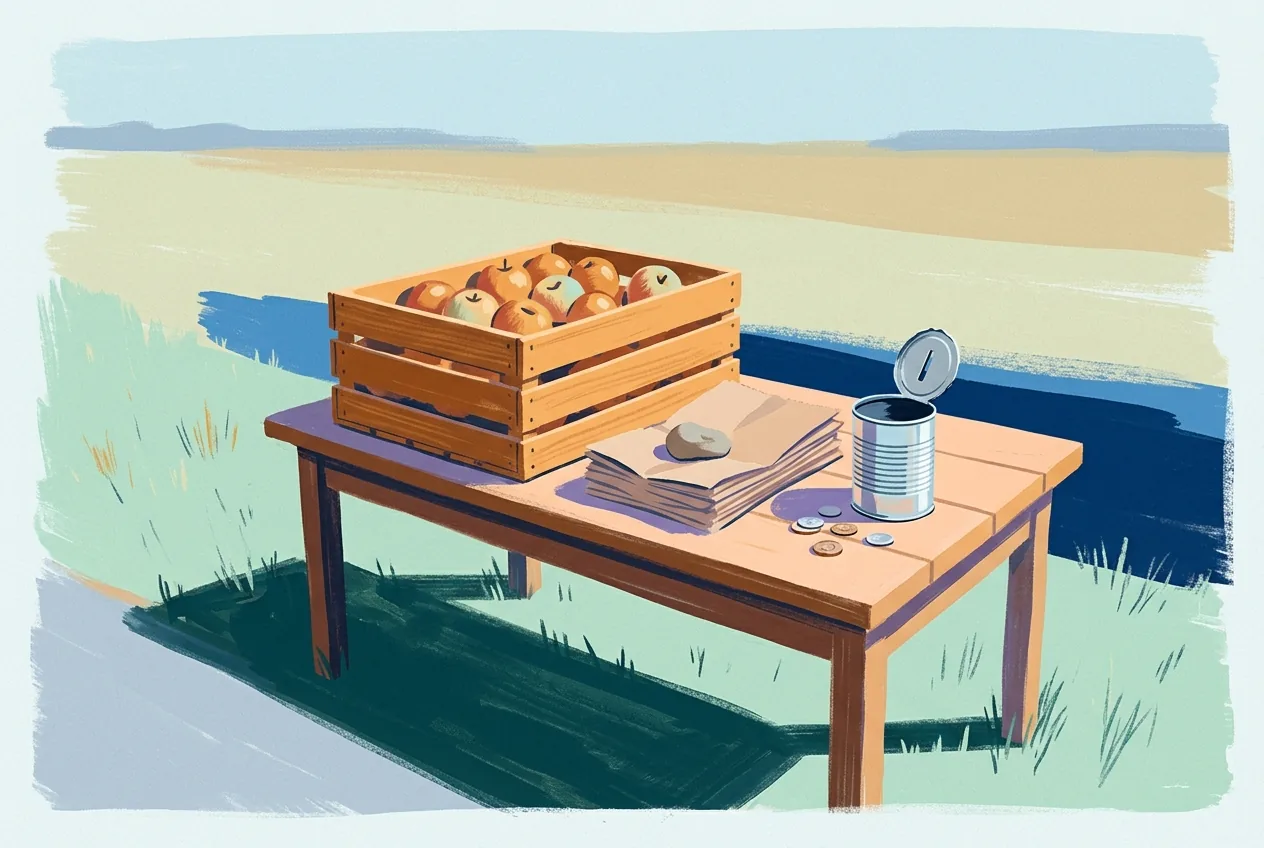
How much you value sincerity, fairness, modesty, and staying free from the pull of status or money.
What Honesty and humility measures

Honesty and humility asks how much a person values fairness, sincerity, modesty, and freedom from status seeking. It appears in choices about credit, money, influence, and unequal advantages. Someone can care about recognition without making it central, or give careful attention to whether an exchange leaves other people with a fair share. The scale describes these priorities and self-descriptions across ordinary situations.
Its four facets add detail to one broad question. Sincerity concerns straightforward dealings, fairness concerns taking no undue advantage, Not chasing status concerns the pull of prestige and wealth, and Modesty concerns how prominently someone places themselves. The trait describes a pattern of values, not a verdict about character or a prediction of behavior.

The two ends
This is a scale, not two camps. Most people land somewhere between the ends, and neither end is better. Each describes a different way of responding, with useful qualities and possible costs.
People answering toward this end place strong value on fair dealing, plain sincerity, modest self-presentation, and freedom from status competition. This can make recognition and material advantage feel less compelling. The same distance from status can also make it harder to claim credit, negotiate for more, or accept that visibility sometimes serves a useful purpose.
The facets of Honesty and humility
Honesty and humility is the average of these four facets. Somebody can land high on one and low on another, so the broad trait can contain a mixed pattern.
-
Sincerity
How much you present yourself rather than flattering, performing, or saying what others want to hear.
-
Fairness
How much you play fair, respect what belongs to others, and avoid bending rules for personal gain.
-
Not chasing status
How easily you can do without wealth, power, fame, or status for their own sake.
-
Modesty
How much you see yourself as an ordinary person rather than needing to appear better than others.
How it lines up with five
See all five traits →No five-trait assessment has a scale for Honesty and humility. Its concerns can get spread across the five traits, mostly into Agreeableness, which can make fairness, sincerity, modesty, and status seeking look like one broader interpersonal style. This site’s reading treats them as a distinct set of questions.
This section is our reading of how the traits relate, not a research finding about every individual result.
The other traits
All six traits →-

Emotionality
How much you feel physical risk, worry, need for support, and other people’s emotions.
-

Extraversion
How much you express yourself, seek company, speak up, and bring energy into your surroundings.
-

Agreeableness
How you react when people annoy or wrong you, from letting things go to becoming irritated or firm.
-

Conscientiousness
How much you organize, work steadily, notice details, and think ahead before acting.
-

Openness
How much you seek beauty, ideas, imagination, and ways of seeing the world beyond convention.
See your Honesty and humility result
The assessment has 240 statements. It returns a score for this trait and a separate view of its four facets.

Questions
Is a higher score better?
No. Each end comes with something that helps and something that gets in the way, and where a person lands describes a preference instead of a grade. Honesty and humility and Agreeableness have lower ends that people can read as judgments, so neither end deserves praise or blame.
Does a low score mean someone is dishonest?
No. The statements ask how somebody describes themselves, which isn’t a record of what they do. There is no cut-off and no verdict on anybody’s character. Nothing here should decide whether to trust, hire, or believe a person.
Where does this come from?
The statements are public domain and come from the International Personality Item Pool[1]. The 24 facet scales were published in 2007[2]. A result is compared with 460 adults of the Eugene-Springfield Community Sample who answered all 240 statements by mail between 1994 and 2003. The group’s own answers give the average, the typical range and the percentile.
- 1 Goldberg, L. R., Johnson, J. A., Eber, H. W., Hogan, R., Ashton, M. C., Cloninger, C. R., et al. (2006). The international personality item pool and the future of public-domain personality measures. Journal of Research in Personality, 40, 84–96.
- 2 Ashton, M. C., Lee, K., & Goldberg, L. R. (2007). The IPIP–HEXACO scales: An alternative, public-domain measure of the personality constructs in the HEXACO model. Personality and Individual Differences, 42, 1515–1526. Link