Types / Personality types / Grounded Quiet

Personality typeIS · Grounded Quiet

The Anchor.

The person who notices what needs handling—and quietly handles it before it becomes everyone’s problem.

ISTJ

Introversion, Sensing, Thinking, Judging.

ISTJ · Personality typeThe Anchor
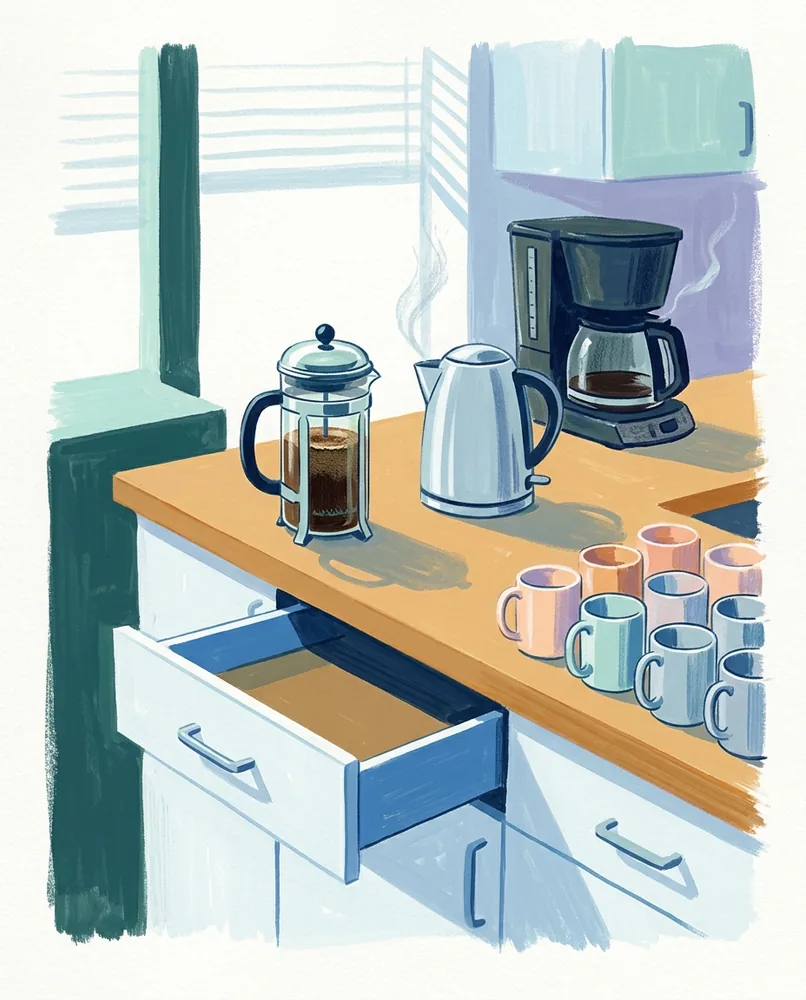
A coffee press steeps beside a steaming kettle and empty mugs on an office kitchen counter, with an old coffee maker behind.

The Anchor at a glance

Habit is thus the enormous fly-wheel of society…

William James, The Principles of Psychology

A thunderstorm knocks the power out on a Tuesday night. Phones light up, someone asks where the candles are, and a neighbor starts a group text about whether the whole street is dark. An ISTJ may already be at the hall closet, handing out flashlights and checking the breaker box. The batteries were replaced when the clocks changed, as they are every year. They did not prepare to impress anyone. They prepared because small acts of upkeep make difficult moments less difficult. That is the instinct behind The Anchor: making life more dependable. They notice what was promised, what has been proven, what is missing, and what needs to happen next. They may remember the detail that prevents a larger mistake, the sequence that keeps work moving, or the maintenance task everyone appreciates only after it has been skipped. This is not simply a love of rules. It is a belief that trust is built from what people repeatedly do. Their practical attention can make them steady, responsible, and difficult to surprise. It can also make novelty feel under-tested, improvisation feel unnecessarily risky, and their quietness easier for others to misread.

What drives them

1/3

Promises become obligations

A brass desk lamp shines in a dark room, casting a pool of light across a bare wooden desk.

Their word may be unusually important to them. If a report is due Friday, an ISTJ may proofread it Thursday night even when nobody would mind Monday. If they borrow a ladder and promise to return it over the weekend, returning it clean and on time can feel like more than good manners. It is the restoration of an agreement.

This gives their commitments a concrete quality. They may not experience a promise as a vague intention or a hopeful mood. It becomes an obligation with a place in the world, and completing it restores order. The strength is obvious: people can build plans around them. The cost is that they may judge themselves harshly for ordinary delays, changing circumstances, or limits that were never theirs to solve.

What experience proves

A coiled hose lies beside a thriving vegetable bed at dusk, with dark, watered soil between the rows.

They also tend to trust the record. The recipe card with the butter stain. The route that avoids a light that always takes forever. The owner’s manual kept in the kitchen drawer because that error code may return. Experience gives them a private map of what works, what fails, and which small shortcut eventually creates a large repair.

New ideas can receive a fair hearing from them, but enthusiasm is not the same as evidence. They may ask how a method performed under pressure, who will maintain it, and what happens when the original conditions change. That caution protects people from fashionable solutions that have not survived contact with real life. Its cost is that a proven method can remain in place after the problem has changed.

Usefulness without applause

A wooden spinning top turns on a bare tabletop, with a blurred rim and a long shadow beside it.

Much of their best work may happen without an audience. They may prefer the quiet satisfaction of a thing done correctly to the public energy of being praised for doing it. A thank-you is welcome; being made the center of attention may feel like an unnecessary second task.

There is dignity in this kind of usefulness, but invisibility has a cost. Others may benefit from their preparation without realizing how much judgment, memory, and effort it required. If they wait for the finished result to explain their contribution, someone less observant may mistake their reliability for ease—or assume they need nothing in return.

How their letters work together

1/5

ISTJ on four scales

ISTJ sits on the Introversion, Sensing, Thinking, and Judging side of its four scales.

The shaded half of each scale shows where every ISTJ falls. Take the personality assessment and your own dots will appear too.

Records create continuity

Four candles of different heights burn together on a shallow dish, with wax pooled between them.

Their four letters reinforce one another in a particular way. The S side of their pattern tends to ask what is real, established, and observable. The J side tends to turn that information into commitments, schedules, standards, and completed work. Together, they can make them unusually attentive to the bridge between a plan and its consequences.

Their S and J often produce records that last. They may keep a tax folder with a tab for every year, an oil-change log in the glove box, or a documented process that lets someone else repeat the work without guessing. For them, memory is useful, but a record is more dependable: it can be checked, handed over, and used when the original person is unavailable.

When systems outlast problems
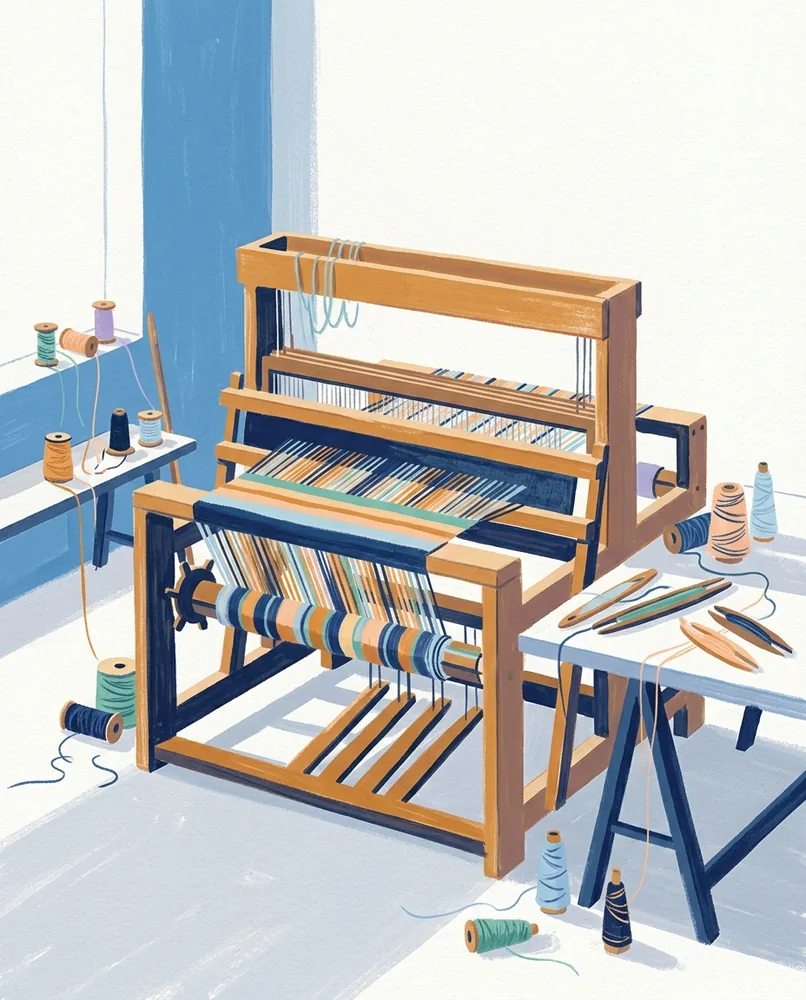
A floor loom holds tightly stretched warp threads, with a hand's width of striped weaving begun at the bottom.

That habit protects continuity. It also means they may notice neglect before anyone else does, because they can see the missing entry, skipped step, or overdue task. The same strength can make them reluctant to discard a system simply because it looks old. A method with a long history feels like evidence—but history alone does not prove that it still deserves its place.

Private preparation

A stone arch set into a garden wall has a keystone at the top catching the sunlight.

Their I and J often team up before anyone else arrives. They may prepare alone at the kitchen table, read the whole packet, check the details, and identify the problem on page 14 before the meeting begins. They might say little during the discussion because they are still deciding what is useful to add.

This makes their follow-through easy to underestimate. They may not narrate the work of preparing, and they may not announce the work of finishing. The result simply appears on time. That is efficient, but it can leave them carrying invisible labor—and leave others without the information they need to understand their judgment or appreciate their limits.

Familiarity and its limits

Nested mixing bowls in graduated sizes are stacked on a kitchen counter in clear morning light.

Their I and S can make a small, familiar world feel rich rather than restricted. The same booth at the same diner, a few friends who go back decades, a hobby they kept from high school, or a neighborhood whose changes they have watched closely may offer continuity and depth. Repetition is not automatically a rut when each return contains memory, competence, and ease.

The cost appears when familiarity starts making the world smaller than they intended. They may decline an experience not because it is wrong for them, but because the uncertainty around it feels like work. A known path gives them confidence; an unfamiliar path may need a longer runway before they can see whether it is worth taking.

The backstop role
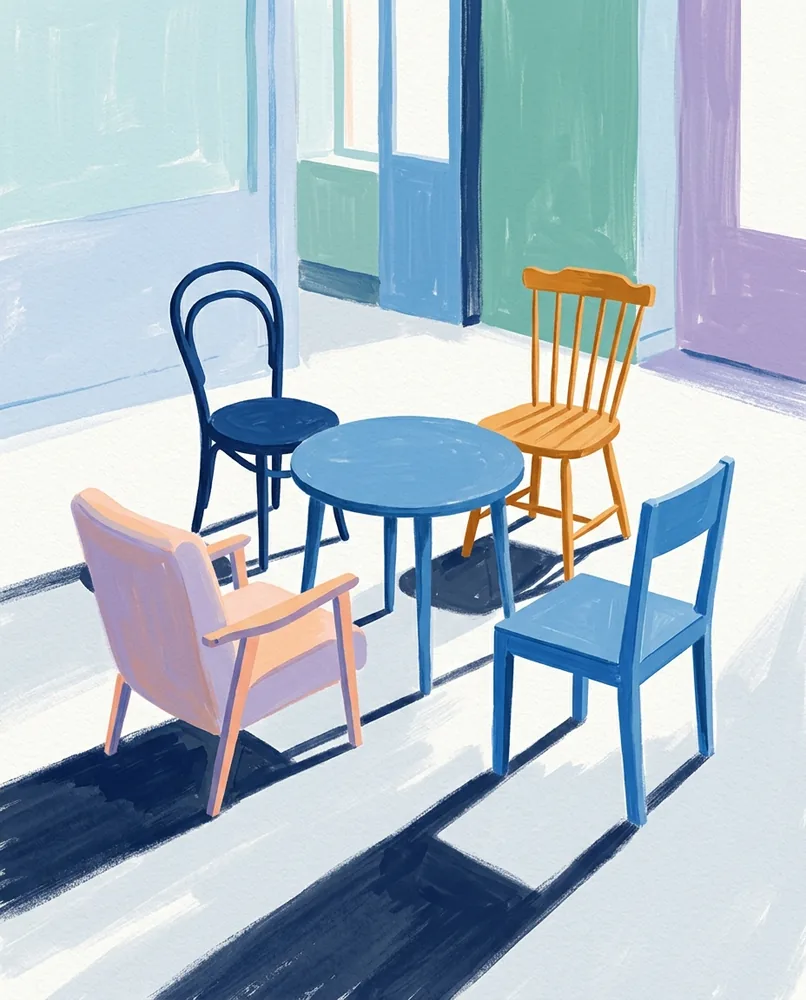
Four chairs with different designs are pulled around a small round table.

Taken together, these tendencies often make them the backstop—the person whose steady upkeep keeps other people’s days running. They remember the deadline, renew the thing before it expires, bring the missing tool, and notice when a promise has quietly become their responsibility. People may feel secure around them because important details do not disappear.

This kind of work is often easiest to see when it stops. Take a week away and others may discover how many small systems depended on them. Being needed can feel important, but it can also become a trap if everyone treats their competence as unlimited capacity. Reliability is a strength; it is not consent to take on every neglected task.

How other people see them

1/4

Care can look quiet

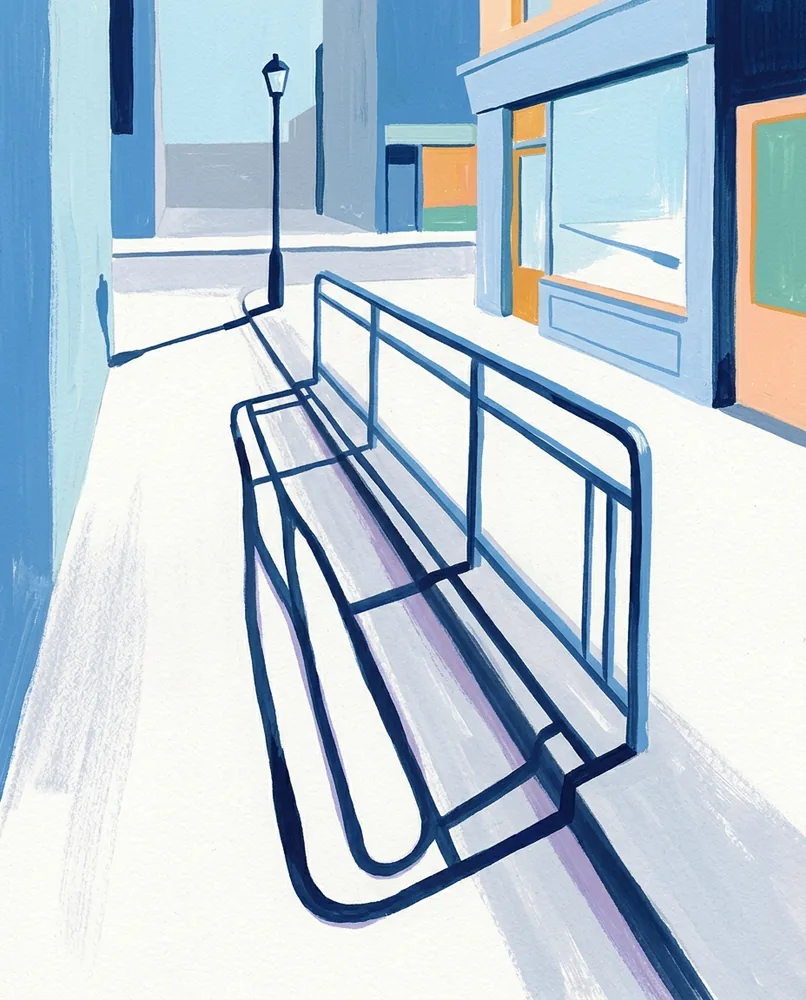
A sidewalk railing casts a shadow far longer and more irregular than the railing itself.

A recurring gap may appear between what they mean and what other people experience. They may be offering care through preparation, caution, or dependability while someone else is waiting for warmth, enthusiasm, or visible reassurance. Quiet can get mistaken for unimpressed.

They may sit through a coworker’s proposal taking careful notes and saying almost nothing because they are testing the details and thinking through the consequences. From across the table, the notes and silence can look like a rejection. Their actual response may arrive two days later in a thoughtful message—and contain mostly good news.

The gap is not a failure of either person. They are giving their attention before giving their reaction. Other people may need a small sign that their effort has reached them. Saying they are still considering an idea while naming what may work can keep silence from misleading others.

Questions can sound resistant
A shop window at dusk reflects the street across its glass, while the warm interior glows behind it.

Asking how something went last time can sound like pushback. To an ISTJ, it is a practical first question: previous attempts reveal hidden costs, missing steps, and conditions that make a plan succeed. To someone excited about a new idea, though, the question may land like a door swinging shut.

They do not have to abandon their evidence-based caution. They may get better results by explaining that their question aims to understand what they learned and strengthen the current version. That sentence helps others hear investigation where they might otherwise hear resistance.

Routines can look stubborn

A hallway mirror reflects an empty room and a vase of flowers on the table opposite.

Their routines can look like stubbornness. Ordering the same sandwich at the same deli for six years may mean the decision is solved, the result is good, and their attention is free for something that matters more. To a friend, it may look like a refusal to experiment or enjoy the unexpected.

The strength is selective attention: not every choice deserves fresh deliberation. The cost is that they may dismiss small experiments that could bring delight, efficiency, or a needed change. Keeping one part of life familiar does not require making every part of it permanent.

Planning needs coordination

A picture frame faces the wall on a mantelpiece, with a clock and vase standing on either side.

Planning ahead can come across as needing control. Buying concert tickets the morning they go on sale may be their way of making sure the night happens at all. A friend who prefers to decide the week of may feel their say was skipped, when their intention was simply to protect the opportunity before it disappeared.

Their plans are often acts of care, but care still needs coordination. Asking who wants input, which details are fixed, and which can remain open lets other people participate without forcing them to abandon preparation. The goal is not to plan less; it is to make room for the people the plan is meant to include.

People who know them well tend to read them better. They have seen the flashlights come out. They know that their restrained reaction may contain close attention, that their reminders may be an attempt to protect a shared goal, and that showing up when it matters is one of their clearest forms of affection.

They can still help newer people read them sooner. Letting others see a little more of the intention behind the habit—explaining why a detail matters, offering an early sign of approval, or saying when they are preparing because they care—can help. Reliability earns trust over time; a small amount of visibility helps trust begin.

How they compare with two neighbors

1/4

One letter from ISTJ

What the comparisons show

An open drawer of matching steel cutlery holds one bone-handled knife among the pieces.

Four other types share three of their four letters. The comparison is most useful when it shows what changes when one preference shifts. Here are two nearby patterns.

The Fixer improvises

Small iron mailbox doors line a hallway, with rosemary tucked into one slot.

The Fixer (ISTP) shares their I and S and differs on the J. Send one of each camping. An ISTJ may practice pitching the tent in the backyard and pack from a checklist kept for years. The Fixer may toss a tent, a lighter, and a bag of apples in the trunk and sort out the rest at the campsite.

When a pole snaps, they could splint it with a stick and duct tape before the ISTJ finds the repair sleeve. The ISTJ’s preparation and their improvisation solve different parts of the same problem. When rain starts at 10 p.m., the ISTJ’s tarp may keep the sleeping bags dry. When the planned repair fails, their willingness to work with what is available may get everyone through the night.

The ISTJ’s risk is assuming preparation should have prevented every surprise; theirs is assuming every surprise can be handled in the moment.

The Strategist redesigns

White sheets hang along a clothesline, with one bright amber sheet among them.

The Strategist (INTJ) shares their I and J and differs on the S. Both types may value a plan, independence, and a finished result. The difference is often what the plan is for. An ISTJ may use theirs to keep a proven system running: a vegetable garden with the same tomatoes in the same bed each May because they did well last year.

The Strategist may design a new watering system because the garden could work better than it does now. The ISTJ’s attention protects what already works; theirs is more likely to pursue what could work better. The ISTJ may see their redesign as an unnecessary risk, while they may see the ISTJ’s continuity as an unnecessary limit.

Together, the two approaches can be powerful: one tests the future, and the other makes sure the present does not collapse while the test is underway.

Two other nearby patterns

A shelf of white cups with one deep blue cup standing among them.

That leaves The Organizer (ESTJ), who differs from the ISTJ on the I, and The Caretaker (ISFJ), who differs from the ISTJ on the T and F preference. An ISTJ may share their respect for responsibility while expressing it differently: The Organizer may organize people and decisions in real time, while the ISTJ may prepare more privately.

The Caretaker may place more visible weight on personal impact and harmony, while the ISTJ may begin with consistency, evidence, and obligations. Their guides explore those comparisons in more detail.

The rest of the guide

The chapters below complete the guide, and the Personality Type report gives you the whole guide to your own type.

With other people

Our take The parts below are built from your letters. They describe what might feel easy, where one person’s good intention may land differently than intended, and what could make the difference easier to discuss. Treat them as conversation starters, not predictions.

In a relationship

What may feel easy

A partner who enjoys a quiet Sunday, keeps their word, and does not require every thought to be spoken immediately may feel reassuring from the start. You may both show affection through reliability: remembering the reservation, handling the practical detail, or being there when you said you would. The risk is that your care can become so dependable that it goes unannounced. What feels like love in action to you may feel like routine to someone who needs affection named, celebrated, or made spontaneous.

Where friction may show up

Differences may show up with someone more outgoing, novelty-seeking, and comfortable deciding as they go. They might float a weekend trip on Thursday night while you are still settled into the plan you made last month. Their “let’s see” can sound like disregard for preparation; your preparation can feel to them like a closed door. The real question is not whose style is right, but which plans need protection and where both of you can leave room for surprise.

What they might bring

New places, a looser weekend now and then, and a reminder that a well-kept plan can serve life rather than replace it.

When you are much alike

Someone much like you can bring a quieter conflict. If you both trust your own method, each person may wait for the other to notice the problem, apologize first, or give way. Shared standards can create shared stubbornness: the disagreement stays orderly on the surface while neither of you wants to surrender the principle underneath it.

Research behind this panel

Researchers call the loop in which one person presses for a change and the other pulls back “demand/withdraw.” Across 74 studies, it was linked with unhappier relationships, and it mattered little which partner played which role[C11]. The pattern often looks like pursuit versus avoidance, but both people may be protecting something: one from being ignored, the other from feeling cornered. Who presses tends to depend on whose issue is on the table[C12]. Naming the cycle can help a couple stop arguing about who is the problem and start asking what the cycle is doing to both of them.

In one study of 61 couples, direct requests felt less successful in the moment but led to more change over the next year[C13]. A review of this research suggests that gentler approaches suit problems that are small or cannot be changed[C14]. The useful distinction is not simply direct versus gentle: it is whether the approach fits the stakes. Clear requests help when a real behavior needs to change; softness helps when pressure would add injury without creating a solution.

People included in the research

Most of this research studied married, heterosexual couples in Western countries. One study of the push-pull loop included lesbian and gay couples and found the same link[C12]. Use these findings as useful but incomplete clues, not as a definition of what a relationship should look like.

As a friend

What may feel easy

A friend who enjoys the same trail every other Saturday, keeps a long-running game night alive, and replies when they said they would can feel like home. Familiar routines give you a way to stay close without constantly negotiating the shape of the friendship. Still, consistency is not the same as closeness by itself; a friendship can keep its schedule while quietly losing curiosity about the people inside it.

Where friction may show up

A friend who lives on last-minute plans might text “come out tonight?” at 9 p.m. and be surprised by your no. They may want a new place every time, while you already know what is good at the old one. You may experience their spontaneity as thoughtlessness; they may experience your refusal as a lack of interest. A little structure can help both sides: invite them earlier, and occasionally accept a bounded version of the unfamiliar.

What they might bring

Invitations you would not have made, and a few people you would never have met by following only your usual routes.

When you are much alike

Being alike has its own snag. You could both protect the familiar routine so successfully that neither person risks suggesting something new. Each may assume the other is content, when both are quietly waiting to be invited beyond the usual pattern. Reliability keeps a friendship alive; initiative keeps it from becoming merely well-maintained.

Research behind this panel

In two studies of new acquaintances, more hours together went with growing closer, and leisure time together went with closeness too[C23]. Familiarity creates opportunities for trust, but time alone is not magic: repeated contact is more likely to help when people feel welcomed rather than trapped, evaluated, or ignored.

People included in the research

Most friendship studies so far have looked at students. Friendships later in life can carry different pressures, histories, and choices about time, so treat these findings as a starting point rather than a complete picture.

At work

What may feel easy

Coworkers who write things down, meet the date they gave, and let you work without unnecessary interruption may be easiest to trust. A shared process can reduce friction because people do not have to renegotiate expectations every day. Your dependability can make you the person others rely on when details matter. The cost is that you may become the unofficial safety net, quietly absorbing missed handoffs until resentment replaces cooperation.

Where friction may show up

A teammate who is more outgoing, more drawn to new possibilities, and happier to decide in the moment might pitch a brand-new approach halfway through a project that is working fine. They may settle a question aloud in the meeting before you have finished testing the consequences. You may hear avoidable risk; they may hear resistance to improvement.

What they might bring

Fresh options, and a useful test of whether the old way still works under the conditions you face now.

When you are much alike

Sameness can trip you up too. Two people who each trust their own method can end up running parallel versions of the same process, each assuming the other will adapt. Because both approaches may be competent, the conflict can hide inside duplicated work and quiet irritation.

Research behind this panel

In a meta-analysis of work teams, teams whose members differed a lot in conscientiousness—meaning how much each person plans and follows through—tended to perform worse[C19]. Differences can be useful when roles are clear, but large gaps in follow-through create a hidden contract: the most organized people begin carrying reminders, checking details, and rescuing deadlines.

A meta-analysis of work groups found that conflict about each other, or about how the work gets done, went with worse group results, while disagreeing about the task itself was not strongly tied to worse performance[C22]. A team can challenge an idea without attacking a colleague. The distinction becomes harder to maintain when criticism is vague, personal, or tied to status.

People included in the research

Research on teams mixes real workplaces with student project groups, so treat it as a rough guide. A team is also influenced by its manager, incentives, workload, power differences, and whether people have room to work in their own way.

  • C1 Dyrenforth, Kashy, Donnellan & Lucas (2010). Journal of Personality and Social Psychology 99(4), 690–702. Abstract only DOI
  • C2 Malouff et al. (2010). Journal of Research in Personality 44(1), 124–127. Abstract only DOI
  • C3 Joel et al. (2020). Proceedings of the National Academy of Sciences 117(32), 19061–19071. Read the full article DOI
  • C5 Yang et al. (2026). Social Psychological and Personality Science. Abstract only DOI
  • C6 Körner & Altmann (2023). Journal of Research in Personality 107, 104436. Abstract only DOI
  • C7 Joel, Eastwick & Finkel (2017). Psychological Science 28(10). Abstract only DOI
  • C8 Kong (2010). Journal of Korean Academy of Nursing 40(3), 336. Abstract only DOI
  • C11 Schrodt, Witt & Shimkowski (2014). Communication Monographs 81(1), 28–58. Abstract only DOI
  • C12 Baucom, McFarland & Christensen (2010). Journal of Family Psychology 24(3), 233–242. Abstract only DOI
  • C13 Overall, Fletcher, Simpson & Sibley (2009). Journal of Personality and Social Psychology 96(3), 620–639. Abstract only DOI
  • C14 Overall & McNulty (2017). Current Opinion in Psychology 13, 1–5. Abstract only DOI
  • C19 Peeters, van Tuijl, Rutte & Reymen (2006). European Journal of Personality 20(5), 377–396. Abstract only DOI
  • C22 de Wit, Greer & Jehn (2012). Journal of Applied Psychology 97(2), 360–390. Abstract only DOI
  • C23 Hall (2019). Journal of Social and Personal Relationships 36(4), 1278–1296. Abstract only DOI
  • C33 Neyer & Asendorpf (2001). Journal of Personality and Social Psychology 81(6). Abstract only DOI
  • C34 Lehnart, Neyer & Eccles (2010). Journal of Personality 78(2). Abstract only DOI

Ready to find your own type?

Personality Type gives you your four letters and a page about your type.

Questions

Does my type say how smart I am?

No. The letters describe tendencies in how an ISTJ usually directs attention, makes decisions, relates to people, and organizes their life. They do not measure intelligence, talent, education, judgment, or how well they will perform in a particular role. An ISTJ may be highly capable in analytical, creative, social, or physical work. Their scores are also continuous: if one is near the middle, their behavior may be flexible or mixed rather than strongly associated with either letter.

Can my type change?

Parts of it can. A letter that came out Nearly a tie could flip if you answer on a different day, because a small change in your answers can move a continuous score across the middle. That does not mean your personality suddenly changed; it means the result is showing a close balance between two tendencies. A Strong letter would take a much bigger shift in how you answer to cross the midpoint. Context, recent experiences, and the way you interpret a statement can all matter, so treat the type as a useful summary—not a permanent box. The “Your results” box shows which of your letters are close. Your broader trait scores and your real-life patterns can add more detail than the four letters alone.

Why do I relate to two types?

You may relate to two types for a plain reason. Each letter marks which side of the middle one of your scores fell on, and that score runs by degrees from one end to the other. Each letter is assigned by whether your score falls above or below the 50th percentile, and a score within 5 percentile points of the middle counts as Nearly a tie. That small dividing line can make both descriptions feel familiar, especially in different parts of life. Your four nearest neighbors are The Organizer, The Strategist, The Caretaker, and The Fixer. If one of your letters is Nearly a tie, the neighbor across that letter may explain a real part of you instead of merely being a technical alternative. “Your results” shows which letter is close; compare the situations behind the descriptions instead of asking which label is the one true answer.

Where does this come from?

Your letters come from four of the five broad traits, which include how outgoing, curious, cooperative, and organized you tend to be. They use the same answers as your personality result, with no extra questions. The four letters summarize Extraversion, Openness, Agreeableness, and Conscientiousness; Emotional stability is reported separately rather than folded into the type. Your scores are percentiles compared with a published reference sample, and each letter reflects whether the relevant score falls below or above the 50th percentile. This midpoint is a shorthand, not a hard boundary: a score close to it can support a mixed or changeable experience. The personality statements draw on a public-domain item pool. Research by McCrae and Costa helped establish how letter-based scales can correspond with broad personality traits, but the type descriptions here are Nomigram’s interpretation of those traits together—not a diagnosis or a claim that four letters capture a whole person. The sentences about research and measurement come from the sources listed below.

More about the method

  • McCrae, R. R., & Costa, P. T., Jr. (1989). Journal of Personality, 57(1), 17–40. DOI
See your own personality patternStart now