Types / Personality types / Practical Presence

Personality typeES · Practical Presence

The Organizer.

The one who turns intention into action, gives a group a workable structure, and stays with the method until the job is done.

ESTJ

Extraversion, Sensing, Thinking, Judging.

ESTJ · Personality typeThe Organizer
A couch rests halfway up the steps beside stacked boxes, an open truck, and a door leaned against the railing.

The Organizer at a glance

Know, then, thyself, presume not God to scan; / The proper study of mankind is man.

Alexander Pope, An Essay on Man, Epistle II

The library book sale opens at 9. At 8:15, the tables are still folded against the wall, the cash box has no change, and the volunteers are debating whether cookbooks count as nonfiction. Then someone arrives with a roll of quarters, last year’s signs, and a sketch of where each table should go. By 8:40, people have jobs, supplies are where they belong, and the event has a real chance of starting on time.

That is the instinct behind The Organizer. ESTJs tend to meet life by making it workable. They notice what needs to be decided, organized, repaired, scheduled, clarified, or finished—and they are often willing to be the person who makes the decision visible. A good intention matters more to them when it becomes a dependable result.

The same instinct can create a gap between what they mean and what others experience. They may be trying to reduce confusion; someone else may feel managed. They may be protecting a proven method; someone else may hear a premature no. They may be keeping a promise by taking charge; someone else may wonder whether there is room for their way of doing things.

What drives them

1/4

Where activity feels satisfying

A wooden spinning top turns on a bare tabletop, with a blurred rim and a long shadow beside it.

ESTJs probably like it when things happen, and they like being there when they do. A plan on paper is useful; a plan with people at the tables, a truck at the loading dock, supplies counted, and a start time is more satisfying.

They may get energy from a full Saturday: setting up in the morning, solving small problems as they appear, and seeing the last task completed before they go home. Activity gives their attention something concrete to improve.

When stillness feels unproductive

A cast-iron woodstove burns with its door open, beside a basket of split logs on the hearth.

The cost of that energy is that stillness can feel less like rest than unused capacity. An unstructured day may tempt them to find an errand, a project, or someone who needs a decision. But other people may need time in which nothing is being optimized. Joining them there can be a form of presence, even when no problem is being solved.

Why finishing matters

A coiled hose lies beside a thriving vegetable bed at dusk, with dark, watered soil between the rows.

Finishing matters to ESTJs too. Is the sale done when the doors close? Not quite. The cash still needs counting, the borrowed tables need returning, the leftover books need a destination, and the hardware store deserves a thank-you. When they tell a group, “I’ll handle it,” they often mean handled all the way to the end.

That follow-through makes them dependable, but it can also make delegation difficult. If they quietly redo a task because it was not completed their way, people may learn that their request was really a test. Clear standards, a shared definition of done, and genuine room for another person’s method can preserve the result without making them the only person who can be trusted with it.

Trusting what has worked

A brass desk lamp shines in a dark room, casting a pool of light across a bare wooden desk.

ESTJs also tend to trust what has worked. Last year’s sign-up sheet had columns for phone numbers and shirt sizes, and nobody ended up swimming in an XL. Why start over?

A new idea can win them over, but they may want evidence that it works somewhere, a practical explanation of the risks, and a way to test it without endangering the whole event. Sounding exciting in a meeting is not the same as being ready. That caution protects people from novelty for its own sake. Its cost is that a method can remain in place after its original problem has changed. Before rejecting an unfamiliar approach, it may help to ask what evidence would change their mind—and whether the person proposing it is asking them to abandon the system or improve it.

How their letters work together

1/4

ESTJ on four scales

ESTJ sits on the Extraversion, Sensing, Thinking, and Judging side of its four scales.

The shaded half of each scale shows where every ESTJ falls. Take the personality assessment and your own dots will appear too.

Organizing out loud

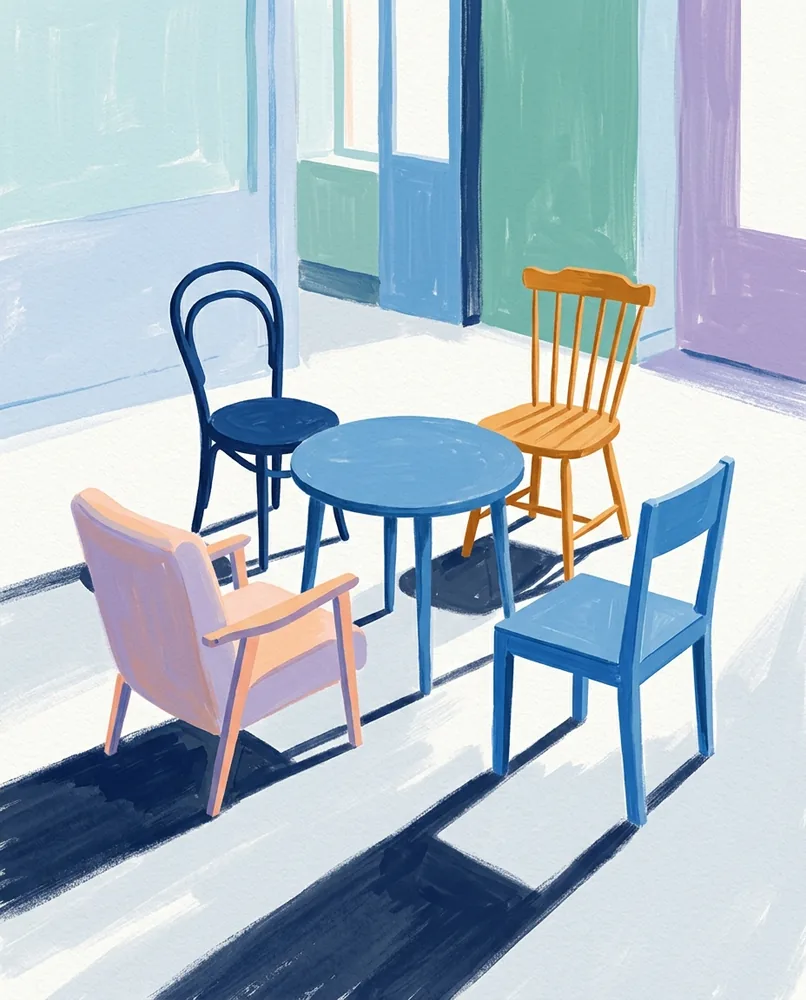
Four chairs with different designs are pulled around a small round table.

Their E and their J together tend to organize out loud. Planning does not stay in a notebook; it goes into the group text, onto the whiteboard, and into the Monday meeting, with a name beside each job. They may be the one saying, “You’re on drinks, I’ve got the grill, and we eat at noon,” while everyone else is still saying, “We should do something.”

A plan spoken in front of people can become a promise, and promises are the part they tend to keep. The benefit is momentum. The risk is that a public plan can feel like a decision before quieter people have had time to think. Asking what they may be missing before assigning final roles can turn their organizing strength into shared ownership.

Keeping systems in repair
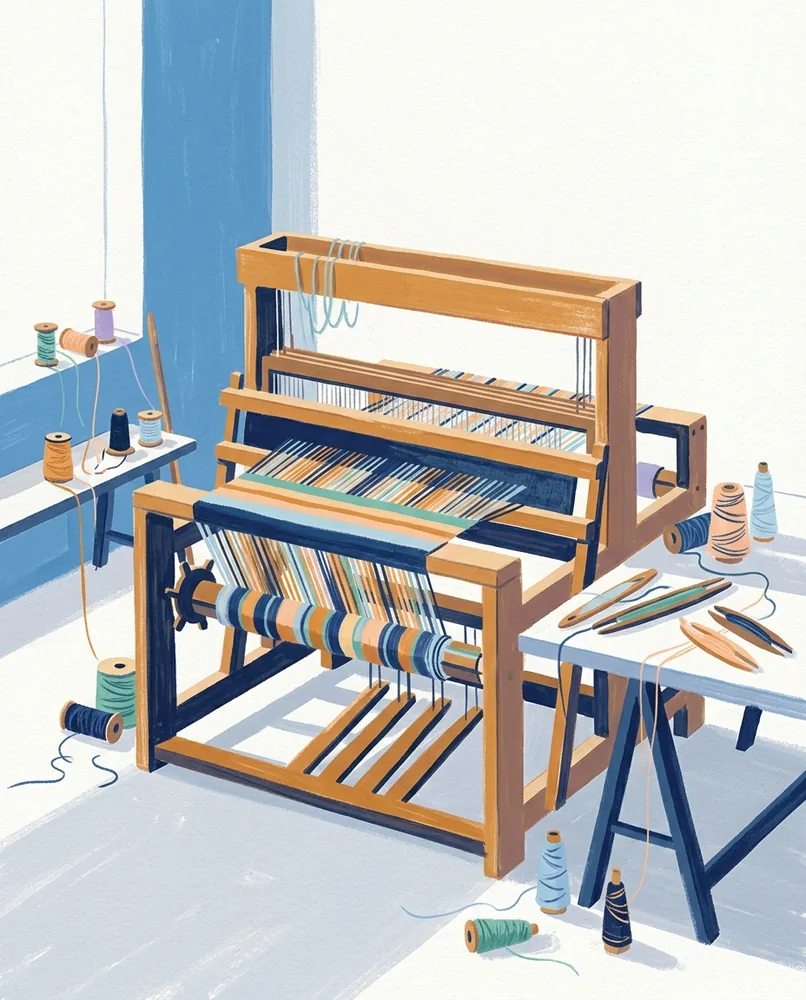
A floor loom holds tightly stretched warp threads, with a hand's width of striped weaving begun at the bottom.

Their S and their J together tend to keep proven systems in good repair. They remember which vendor arrived late, where the extension cords are stored, and what permission was needed last year. Then they turn those lessons into a process someone else can follow.

A binder for the school fundraiser, with tabs for vendors, permits, receipts, and emergency contacts, is not bureaucracy for its own sake. It is a way of making experience available next time. The cost is that maintenance can become loyalty to the old method. A system should keep what was learned, not freeze every past assumption. Leave a place in the process for reviewing what no longer fits.

Turning intentions into logistics

Four candles of different heights burn together on a shallow dish, with wax pooled between them.

Their E and their S together tend to keep them close to the hands-on world. They may rather walk the venue than study photos of it, meet the contractor on site than trade emails for a week, and see the actual materials before approving a plan. Big-picture talk is welcome when it turns into Tuesday’s to-do list before too long.

This makes them good at translating intention into logistics. It can also make distant possibilities seem less real than immediate facts. An idea does not become practical by being vague, but it may need a little room to develop before it can be evaluated fairly.

Becoming the person in charge

A stone arch set into a garden wall has a keystone at the top catching the sunlight.

Put the tendencies together and ESTJs often become The Organizer: the person people look to when something has to happen with a crowd, by a certain date, using resources that cannot be wasted. They may take responsibility before anyone formally gives it to them because waiting can feel more dangerous than stepping in.

That can make them essential—and overextended. If they are always the person who notices, assigns, checks, and closes the loop, others may stop developing those muscles. A quieter Saturday may feel uncomfortable at first, but leaving some capacity unused can teach a group that responsibility belongs to more than one person.

How other people see them

1/4

When their energy arrives first

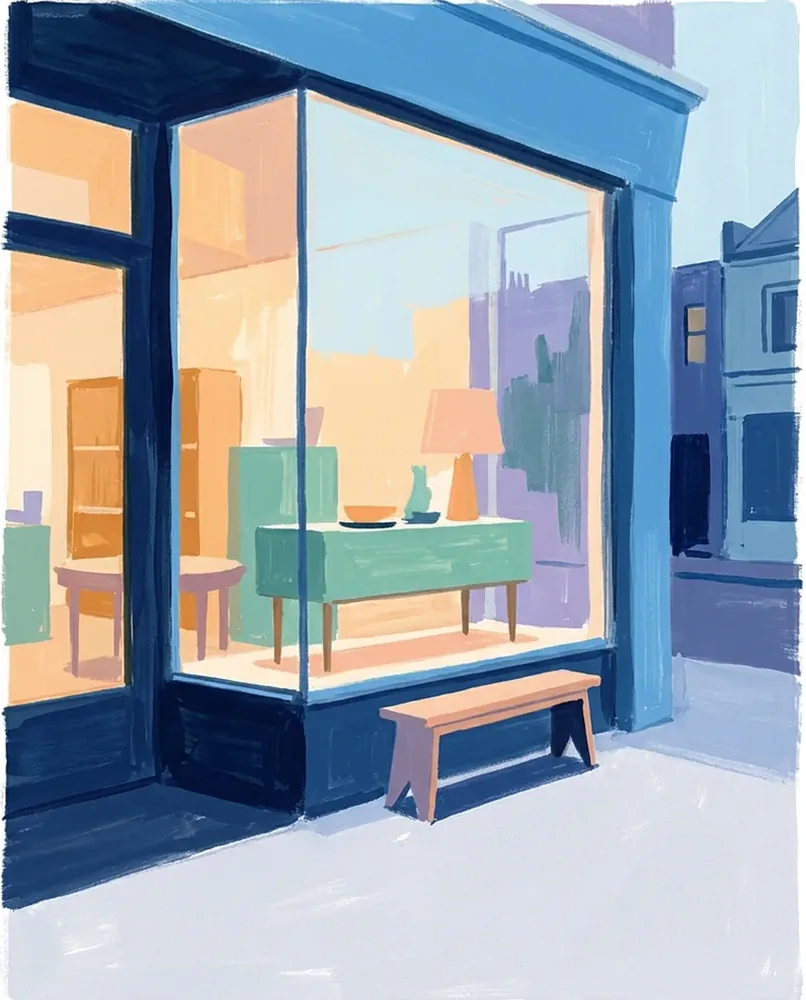
A shop window at dusk reflects the street across its glass, while the warm interior glows behind it.

Of their four letters, their E may show first. Extraversion, the trait behind their E, concerns how much energy and attention they tend to draw from interaction with the outside world. They may think by talking, become more alert when other people are engaged, and move toward the room where something is happening. Their energy can enter a space before their explanation does.

That visibility is useful when a group needs momentum. It also means people may assume they are more certain, more comfortable, or more interested in leading than they actually feel. They can explain whether they are thinking aloud or assigning a task because the deadline is close, not because they want control over every detail.

When directness feels like authority
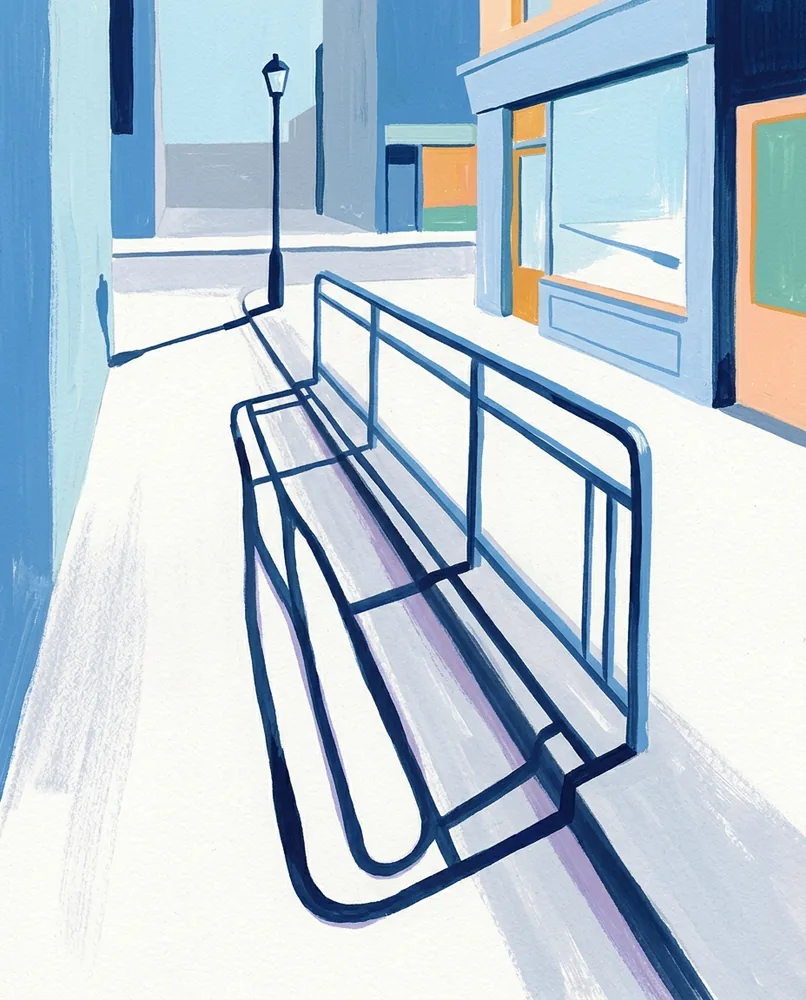
A sidewalk railing casts a shadow far longer and more irregular than the railing itself.

The rest of the pattern is easier to misread. Take the book sale. When they hand out jobs at 8:15, they may mean, “Nobody else volunteered, and the doors open at 9.” A newer volunteer may experience the same action as a demand to accept their authority. Their practical directness is trying to protect the event; the volunteer’s first concern may be whether they are being respected.

They do not have to become vague to become easier to work with. They can state what must be true by 9 and invite the other person’s help choosing how to get there. The task stays clear while the other person remains a participant.

When evidence sounds like rejection

A hallway mirror reflects an empty room and a vase of flowers on the table opposite.

Their trust in what has worked can be misread too. Someone suggests selling the books online, and their first question is how that went for the library across town. To them, that is how an idea receives a fair hearing: through evidence, constraints, and a workable test. To the other person, it may sound as if the answer is already no.

They can try separating evaluation from dismissal. They can say they are interested while asking about the cost and possible failure points. Curiosity does not require believing an idea will work. It only requires giving the idea enough room to show what it might offer.

Making their limits visible

A picture frame faces the wall on a mantelpiece, with a clock and vase standing on either side.

A full calendar can make it look as if they have everything under control, so people may not think to offer help. The people who have worked a long event beside them may know better. They have seen who stays to stack the last chair, who remembers the missing receipt, and who keeps solving problems after everyone else has gone home.

Because competence often hides its own cost, they may need to make their limits visible before they reach them. Asking for help is not evidence that the plan failed. It is part of designing a plan that does not depend on one person’s constant effort.

What sets them apart from The Anchor and The Fixer

1/4

One letter from ESTJ

How nearby types shift emphasis

Five terracotta pots line a low wall, each holding a different plant.

The nearest types can show which parts of their pattern are strongest. Change one letter and the emphasis shifts: the same practical concern may become quieter, more improvisational, more future-focused, or more relationship-centered. These comparisons are useful contrasts, not fixed borders.

The Anchor works behind scenes

White sheets hang along a clothesline, with one bright amber sheet among them.

The Anchor (ISTJ) shares ESTJs’ trust in what works and their pull toward finishing, but differs on E. Put either of them in charge of moving an office to a new floor and the move would probably be carefully handled. The Anchor may run it from behind the scenes, with a labeled floor plan emailed the night before and a quiet hour reviewing the list with the movers.

ESTJs are more likely to stand at the elevator on Friday morning, point people toward their desks, and answer questions as they arise. The Anchor’s approach may spare everyone a crowded hallway. The ESTJ’s may make the situation feel immediately navigable. The difference is not commitment; it is where the work becomes visible. If ESTJs mistake the Anchor’s quiet for disengagement, or the Anchor mistakes their visibility for a need to dominate, both of them miss the practical care underneath.

The Daredevil adapts in motion
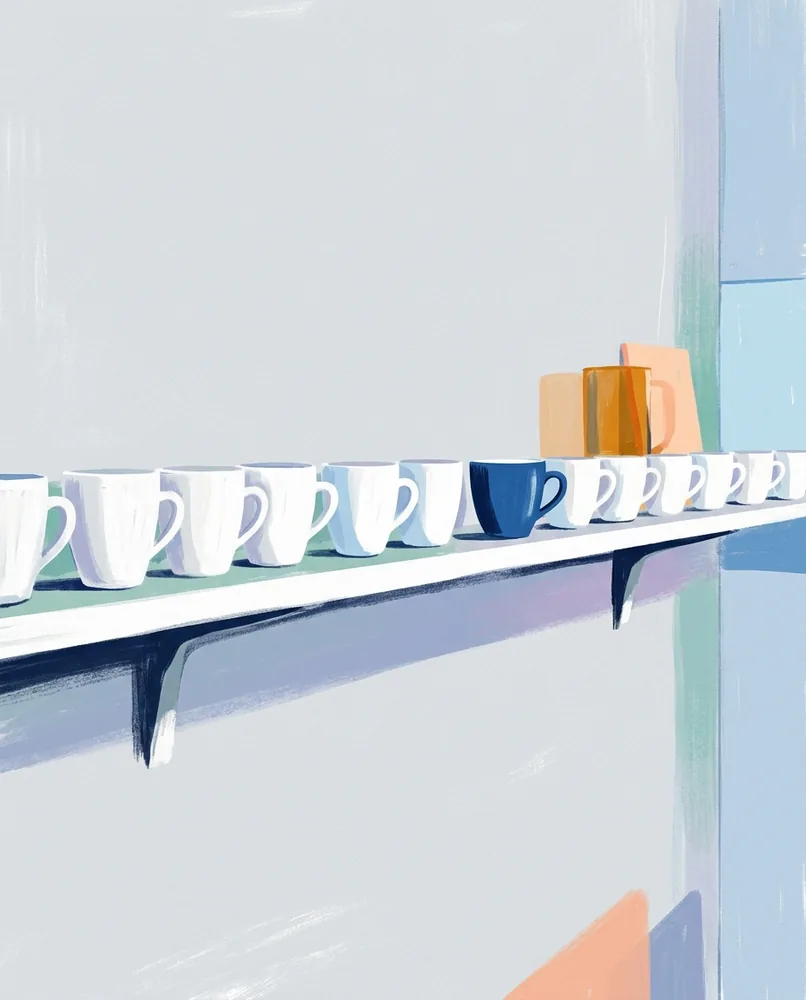
A shelf of white cups with one deep blue cup standing among them.

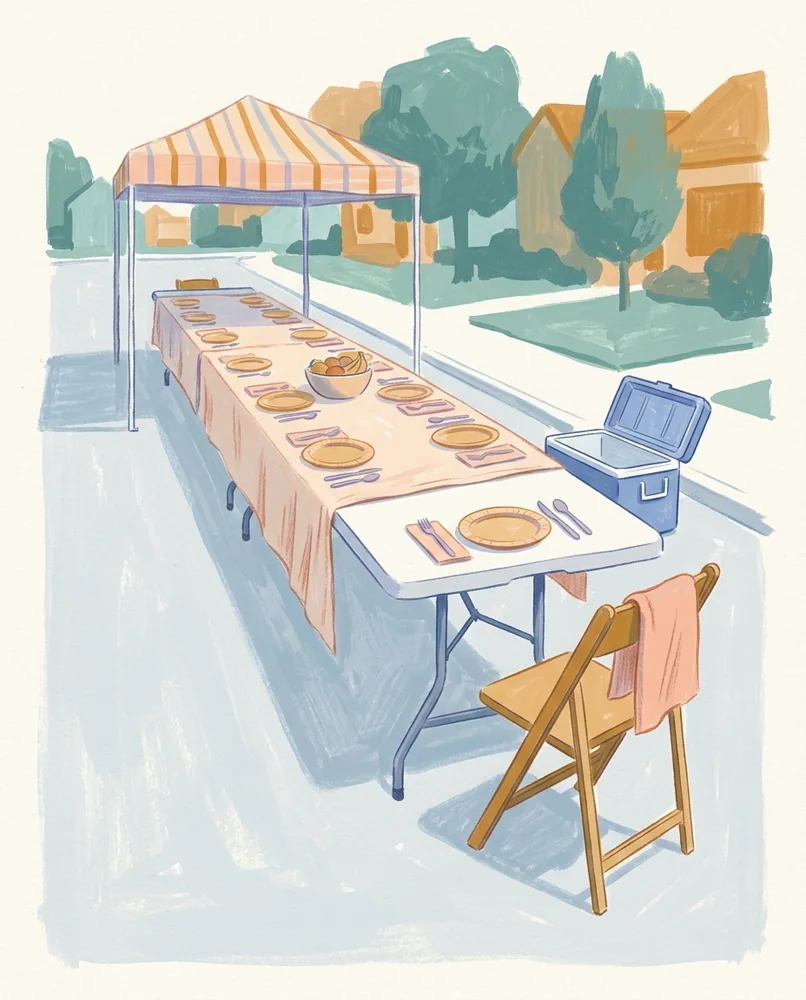
The Daredevil (ESTP) shares ESTJs’ outgoing energy and practical streak, but differs on J. Put the two of them in charge of a tailgate. ESTJs may have the parking spot claimed, the cooler list shared, and a canopy packed in case of rain by Wednesday. The Daredevil may show up with a grill and a plan to figure out the rest in the parking lot.

Their preparation protects the group from preventable shortages. The Daredevil’s flexibility helps when the weather changes, the shelter is already occupied, or the plan meets a fact nobody anticipated. ESTJs may see the Daredevil as underprepared; the Daredevil may see them as carrying supplies for problems that never arrive. Together, the useful lesson is that readiness includes both preparation and the ability to revise it.

The Captain and The Host
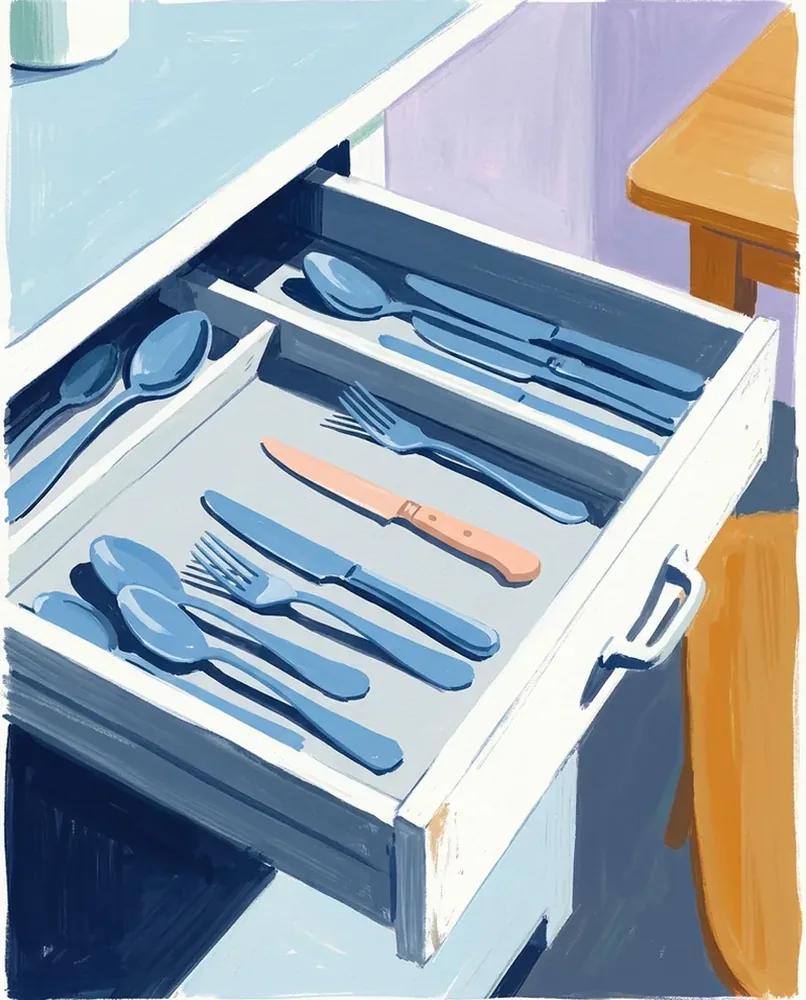
An open drawer of matching steel cutlery holds one bone-handled knife among the pieces.

The other two contrasts are worth a quick word. The Captain (ENTJ) has an N where ESTJs have an S, so they may be more drawn to redesigning the event around a future possibility—a book swap, a new audience, or a different business model.

ESTJs are more likely to focus first on what the current event requires to work reliably. The Host (ESFJ) differs on T, bringing a more relationship-centered emphasis to decisions that ESTJs may approach through standards, evidence, or efficiency. Neither contrast is a verdict about imagination or care. ESTJs may welcome new possibilities once they become concrete, and they may care deeply while expressing it through preparation and follow-through. The question is whether people can recognize the care in the form they naturally give it.
The rest of the guide

The chapters below complete the guide, and the Personality Type report gives you the whole guide to your own type.

With other people

Our take The parts below are built from your letters. They describe what might feel easy, where one person’s good intention may land differently than intended, and what could make the difference easier to discuss. Treat them as conversation starters, not predictions.

In a relationship

What may feel easy

A partner who is dependable, direct, and willing to turn shared intentions into actual plans may feel easy to trust. You may enjoy building a life through visible teamwork: choosing the restaurant, hosting friends, handling the practical details, and knowing each person will do what they said. The strength is momentum and reliability. The possible cost is that a partner can feel managed if every open evening becomes an assignment or every disagreement is treated as a problem to solve.

Where friction may show up

Differences may show up most with someone who needs more time to think, is drawn to possibilities you would not have chosen, or prefers deciding as the moment arrives. Their pause may mean they are considering what matters, not refusing to participate; their flexibility may mean openness, not carelessness. If you move quickly to make life work, they may experience that efficiency as a decision made without them. Your color-coded Saturday can meet their “we’ll see,” and both of you may feel the other is making ordinary life harder than it needs to be.

What they might bring

New ideas, a slower look before deciding, and quiet time together that is not being used to accomplish anything.

When you are much alike

Someone much like you may offer welcome dependability, but sameness can create a quiet contest for control. Two people accustomed to organizing may each assume they are protecting the relationship by taking charge of the move, the wedding, the budget, or the thermostat. The issue may not be competence; it may be whether either person can contribute without directing. Without clearly dividing authority, a practical conversation can turn into a referendum on whose way is sensible.

Research behind this panel

Researchers call the loop in which one person presses for a change and the other pulls back “demand/withdraw.” Across 74 studies, it was linked with unhappier relationships, and it mattered little which partner played which role[C11]. The pattern often looks like pursuit versus avoidance, but both people may be protecting something: one from being ignored, the other from feeling cornered. Who presses tends to depend on whose issue is on the table[C12]. Naming the cycle can help a couple stop arguing about who is the problem and start asking what the cycle is doing to both of them.

In a study of more than 11,000 people in Germany, feeling that the division of work was unfair went with lower relationship satisfaction, whether people felt they did too much or too little[C27]. Fairness is therefore not just a tally of tasks. It includes who notices the work, who carries the planning, whose time is treated as flexible, and whether an agreement still feels mutual after circumstances change.

People included in the research

Most of this research studied married, heterosexual couples in Western countries. One study of the push-pull loop included lesbian and gay couples and found the same link[C12]. Use these findings as useful but incomplete clues, not as a definition of what a relationship should look like.

As a friend

What may feel easy

A friend who confirms the plan, brings what they promised, and is ready to turn an idea into a shared evening may feel especially easy to rely on. You may show friendship through inclusion and follow-through: organizing the dinner, remembering the details, and making sure no one is left out. That steadiness can be generous. It can also become pressure if a friend’s uncertainty or changed mind is treated as a failure of consideration rather than information about what they need.

Where friction may show up

A quieter friend who likes new experiences and loose plans may not answer the group chat immediately, then suggest a different restaurant or leave a big party early. You may read this as unreliability or lack of enthusiasm; they may be protecting attention, following a better idea, or reaching their social limit. The friendship works better when a plan is an invitation rather than a test of loyalty.

What they might bring

One-on-one time, new places, and a looser kind of fun where nobody has to perform reliability every minute.

When you are much alike

Being alike has its own snag. Two organizers can each try to protect the group by planning the same trip twice, in two different spreadsheets, then feel overlooked when the other proceeds without consultation. Shared initiative is useful only when authority is visible. Otherwise, helpfulness can start to feel like competition, and a friendship can become an unspoken negotiation over whose version of the good time wins.

Research behind this panel

In one study of an MBA class, outgoing people collected more friends, and people tended to befriend others about as outgoing as they were[C55]. This may reflect opportunity as much as preference: people who initiate more often create more chances to connect, while quieter people may build fewer but no less important relationships. Visibility can affect who gets chosen without measuring who is worth knowing.

In a study of friendship networks, sharing humor, hobbies and interests, and moral beliefs were among the best predictors of feeling close[C24]. Friends do not need identical personalities. They often need enough shared ground to feel understood, enough room for difference to stay interesting, and enough trust that disagreement does not threaten the bond.

People included in the research

Most friendship studies so far have looked at students. Friendships later in life can carry different pressures, histories, and choices about time, so treat these findings as a starting point rather than a complete picture.

At work

What may feel easy

Coworkers who make goals explicit, meet commitments, and prefer a useful answer to a long detour may be easiest for you to work with. You may bring structure when a team is drifting: clarifying the decision, assigning the next step, and making progress visible. That can turn good intentions into results. The cost is that speed and certainty can crowd out exploration, especially when a person needs time to form an idea or when the first workable answer is not the best one.

Where friction may show up

A teammate who is quieter, more drawn to new possibilities, or happier to decide later may want to explore options you had already ruled out. In a fast meeting, they may go quiet—not because they have nothing to add, but because the group has moved past the time they need to think. If you reward only immediate clarity, the team may mistake fluency for insight. A short pause, written input, or a second look can reveal risks and options that urgency concealed.

What they might bring

Options you had not considered, and a slower look before a consequential call. A pause can improve execution when it prevents the team from executing the wrong answer efficiently.

When you are much alike

Sameness can trip you up too. Two people who like to run the meeting may each try to set the agenda, answer every question, and assign the next step. Their shared drive can look like leadership from the inside and like a power struggle from the outside. The remedy is not less initiative; it is explicit ownership, so each person can lead a real piece without competing to control the whole.

Research behind this panel

In one study of student teams, teammates saw outgoing members as having more effect on the group’s results than quieter members[C37]. Being noticed is not the same as contributing more. Speaking often can make influence easier to see, while careful preparation, listening, and private problem-solving may remain invisible unless the team actively makes room for them.

A meta-analysis of work groups found that conflict about each other, or about how the work gets done, went with worse group results, while disagreeing about the task itself was not strongly tied to worse performance[C22]. A team can challenge an idea without attacking a colleague. The distinction becomes harder to maintain when criticism is vague, personal, or tied to status.

People included in the research

Research on teams mixes real workplaces with student project groups, so treat it as a rough guide. A team is also influenced by its manager, incentives, workload, power differences, and whether people have room to work in their own way.

  • C1 Dyrenforth, Kashy, Donnellan & Lucas (2010). Journal of Personality and Social Psychology 99(4), 690–702. Abstract only DOI
  • C2 Malouff et al. (2010). Journal of Research in Personality 44(1), 124–127. Abstract only DOI
  • C3 Joel et al. (2020). Proceedings of the National Academy of Sciences 117(32), 19061–19071. Read the full article DOI
  • C5 Yang et al. (2026). Social Psychological and Personality Science. Abstract only DOI
  • C6 Körner & Altmann (2023). Journal of Research in Personality 107, 104436. Abstract only DOI
  • C7 Joel, Eastwick & Finkel (2017). Psychological Science 28(10). Abstract only DOI
  • C8 Kong (2010). Journal of Korean Academy of Nursing 40(3), 336. Abstract only DOI
  • C11 Schrodt, Witt & Shimkowski (2014). Communication Monographs 81(1), 28–58. Abstract only DOI
  • C12 Baucom, McFarland & Christensen (2010). Journal of Family Psychology 24(3), 233–242. Abstract only DOI
  • C22 de Wit, Greer & Jehn (2012). Journal of Applied Psychology 97(2), 360–390. Abstract only DOI
  • C24 Curry & Dunbar (2013). Human Nature 24(3), 336–347. Abstract only DOI
  • C27 Adriaans, Bohmeier & Sauer (2026). Journal of Family Research. Abstract only DOI
  • C33 Neyer & Asendorpf (2001). Journal of Personality and Social Psychology 81(6). Abstract only DOI
  • C34 Lehnart, Neyer & Eccles (2010). Journal of Personality 78(2). Abstract only DOI
  • C37 Barry & Stewart (1997). Journal of Applied Psychology 82(1), 62–78. Abstract only DOI
  • C55 Feiler & Kleinbaum (2015). Psychological Science 26(5), 593–603. Abstract only DOI

Ready to find your own type?

Personality Type gives you your four letters and a page about your type.

Questions

Does my type say whether I’d make a good boss?

No. The letters describe preferences and tendencies, not leadership ability, judgment, or job performance. An ESTJ may enjoy organizing people and making decisions, but being a good boss also requires listening, explaining context, sharing credit, adapting to different working styles, and noticing when a plan is creating strain. Their type may show them how they naturally lead; it does not tell them whether others experience that leadership as useful, respectful, or trustworthy. Those are skills they can strengthen.

Can my type change?

Parts of it can. A letter that came out Nearly a tie could flip if you answer on a different day or from a different frame of mind, because a small change in your answers can move the score across the middle. A Strong letter would require a much larger shift. Even when your letters stay the same, the strength behind them can change, and life experience can affect how you express a trait. People often become more organized or more assertive as they take on new responsibilities, but that does not mean everyone changes in the same direction or on the same timetable. Treat your type as a current summary of tendencies, not a permanent identity or a prediction of what you must become.

Why do I relate to two types?

Each letter is a matter of degree, not a separate kind of person, and some people land close to the middle. The types one letter away from The Organizer are The Anchor, The Captain, The Host, and The Daredevil. If one of your letters came out Nearly a tie, the type across that letter may describe part of you just as well. Someone close to the E/I midpoint may be forceful in a group and private afterward; someone close to the T/F midpoint may combine firm standards with strong concern for people. “Your results” shows which letter is close, so you can read the neighboring pattern as a useful comparison rather than a contradiction.

Where does this come from?

Your letters come from four of the five broad traits, including how outgoing, open to new ideas, cooperative, and organized you tend to be. They use the same answers as your personality result, with no extra questions. Each letter is based on a percentile compared with a published reference sample, with the midpoint separating the two sides. Research by McCrae and Costa found that the letter scales line up with four of the five traits as separate scales. The descriptions in this guide are an interpretation of those four traits together; they are not diagnoses and do not place you in a fixed box. The personality statements come from the public-domain International Personality Item Pool, and the sentences about research come from the sources listed below.

More about the method

  • McCrae, R. R., & Costa, P. T., Jr. (1989). Journal of Personality, 57(1), 17–40. DOI
  • Vazire (2010). Journal of Personality and Social Psychology 98(2), 281–300. DOI
See your own personality patternStart now