
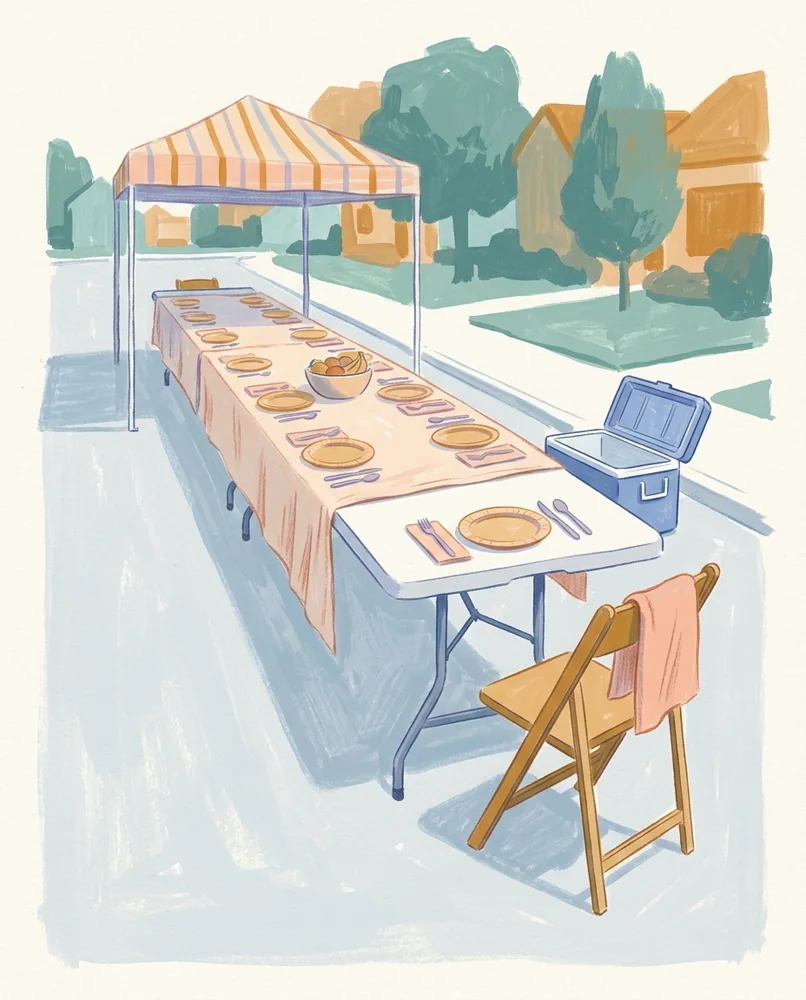
At the end of a family gathering, an ESFJ may be the person wrapping leftovers, checking who needs a ride, and making sure the quieter guest was included. That care is real—but it can quietly teach them that their place in a group depends on being useful. Growth for The Host is not becoming less warm, organized, or dependable. It is learning to include themselves in the circle of people worth caring for. Their life gets stronger when their generosity has boundaries, their traditions have room for revision, and their relationships allow other people to contribute instead of relying on them to hold everything together.
Where growth opens up
1/3Read
Pause before agreeing

ESFJs probably start with the yes. Their warmth and follow-through are probably part of why people trust them with plans, favors, and responsibilities. They may also make a yes feel like a promise before they have checked what it will cost.
A slower answer is not a failure of generosity. It is a way to make their generosity accurate. Before agreeing, they can look at their actual week and ask: Do they want to do this, or do they mainly want to prevent someone else’s disappointment? A considered yes is more dependable than an automatic one—and it leaves room for their own plans to remain real.
Let disagreement unfold

Disagreement is another useful stretch. An ESFJ may notice tension quickly and try to restore ease before anyone feels excluded or upset. Often that makes them a stabilizing presence.
But smoothing things over too early can leave the important sentence unsaid. The person close to them may prefer a direct, uncomfortable conversation to a pleasant relationship built around avoiding certain subjects. They can let a hard talk run its course before changing the topic, adding reassurance, or solving the problem. They do not have to choose between kindness and candor. Kindness can include trusting people enough to hear what is difficult.
Make room for change

Then there is the question of tradition. Familiar ways of doing things can bring back memories, help people feel they belong, and prove that people still matter to one another. Their cost appears when the tradition becomes a test of loyalty, or when a new idea is rejected simply because it has not earned a history yet.
They can let someone else change the recipe, choose the restaurant, or redesign the routine. An experiment may be awkward or disappointing; that does not make it a threat to the group. The old way can remain available without being the only way people are allowed to belong.
Part of the Personality Type reportThe rest of this chapter is in the Personality Type report
Personal limits belong inside The Host’s care, allowing generosity, tradition, and belonging to leave room for mutual support.
The Personality Type report gives you the whole guide to your own type, read alongside your own results, so you can see how your patterns affect work, relationships, and daily decisions.
Free interpretation of your answers when you sign in The full report is $30.
