Understanding The Host
The only way to have a friend is to be one.
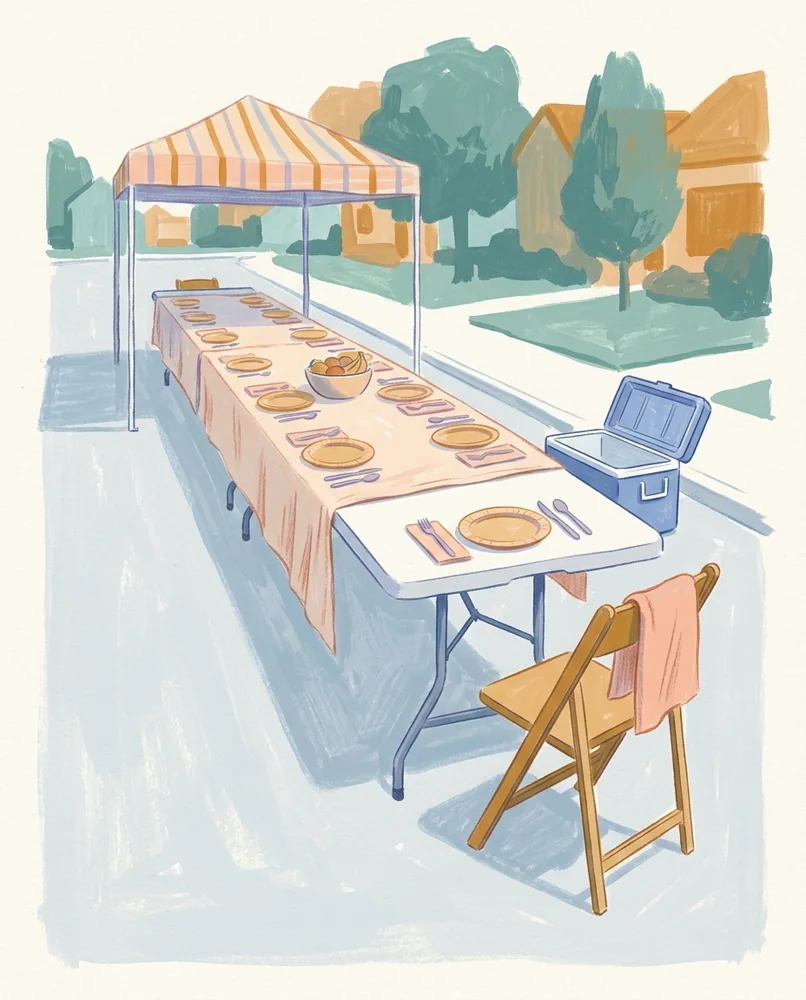
At a surprise party, the cake has been picked up, the gift table is by the door, and someone has saved the comfortable chair for the birthday guest’s grandmother. Before the guest arrives, an ESFJ is also introducing coworkers to college friends so the room will feel like one gathering rather than several separate conversations. That is the practical heart of The Host. They tend to notice who belongs, what needs doing, and which small action will help people feel included. They may enjoy a room full of people, but their attention is rarely spread evenly across the room. They are tracking the atmosphere and the people inside it. They remember the preference, the birthday, the promise, and the person who went quiet halfway through dinner. Their care often becomes something tangible: a message, a meal, an invitation, a plan, or a familiar ritual that tells people they matter.
What drives them
1/4Read
Building social continuity

Company often gives their energy somewhere to go. A packed Thanksgiving table, a lively group chat, or a break room where they know everyone’s latest news can feel more alive than an empty room. They are not merely collecting interactions. They are building continuity: remembering what happened last time, connecting one person to another, and keeping people from becoming strangers to one another.
Bringing people back in

They also notice changes in participation. A friend who stops talking, a coworker who no longer comes to lunch, or a relative who seems unusually quiet may catch their attention before anyone says there is a problem. Their instinct is often to respond rather than simply observe. They send the text, save the plate, make the invitation, or find a reason to bring the person back into the circle.
Making care visible

Familiar ways of doing things can mean a great deal to them. The holiday is not only the food; it is the house, the recipe, the timing, and the people who reliably appear.
A thank-you note, a birthday call, and arriving on time are small acts, but they make care visible. When a tradition still helps people show up for one another, changing it can feel less like innovation and more like removing part of the relationship.
Carrying the atmosphere

The strength is a talent for turning a collection of people into a functioning community. They often know what the group needs next and are willing to provide it. The cost of the same strength is that they may become responsible for the whole atmosphere.
When others are distant, disorganized, or inconsiderate, they can feel not only inconvenienced but personally unsettled—as if the shared world they are maintaining is being treated as disposable.
How their letters work together
1/4Read
ESFJ on four scales
ESFJ sits on the Extraversion, Sensing, Feeling, and Judging side of its four scales.
Making belonging practical

The interesting part is not any letter by itself, but the way their preferences reinforce one another. Their letters often point toward a person who makes belonging practical: they notice people, remember what has worked, and move a vague intention toward a real occasion.
Their E and F together tend to aim their warmth at the whole room. At a wedding, they may notice the plus-one who knows nobody and bring them into a conversation before their loneliness becomes visible. They are often comfortable making the introduction themselves.
Inclusion and dependable compassion
The strength is social initiative in service of inclusion. The cost is that their efforts can become performative in the eyes of someone who wants space, or exhausting to them when every quiet person starts to feel like their assignment.
Their F and J together tend to turn caring into a commitment with a date on it. A friend mentions that a parent’s surgery is on the 14th, and the 14th goes into their phone with a reminder to call.
Care that becomes management
A meal train may come with a schedule, dietary notes, and someone assigned to check whether help is still wanted. The strength is dependable compassion. The cost is that help can become management: they may organize another person’s recovery so thoroughly that they feel cared for, but not entirely free.
Their S and J together tend to give traditions a durable place on the calendar. The cookie swap lands on the second Saturday of December, the familiar recipes appear, and the old sign-up sheet is still useful.
Structure and grounded comfort

New ideas are not impossible, but they face a fair test: will they serve people better than the method already proven to work? The strength is continuity. The cost is that a new approach may be judged before it has had time to become familiar.
Their E and J often help a group cross the distance between “we should” and “Saturday at six.” When a group chat circles around restaurants without deciding, they may offer two choices and a deadline for voting. This is useful because decisions create shared experiences. The cost is that people may experience their helpful structure as pressure, especially when they were still enjoying the freedom to imagine possibilities.
Their S and F keep care close to ordinary life. A friend in the middle of a breakup may receive less abstract analysis from them and more of a plan to get out of the apartment for tacos on Thursday. They trust the healing power of food, errands, company, and a next step that can actually happen.
The strength is grounded comfort. The cost is that they may move to practical help before someone feels fully heard, or become impatient with pain that has no tidy schedule.
How other people see them
1/3Read
The ease they create

Their E is probably what people notice first. They bring motion to a room: conversation, introductions, invitations, and the feeling that something is happening here together. People may experience them as approachable because they make the first move and give them an easy way to participate. What they may not see is how much attention that ease requires. They are often reading several social signals while appearing simply friendly.
Care that looks like control

The care behind their behavior can be easier to miss. A carefully arranged seating plan may look like good manners, even though they considered who would feel comfortable, who needed an ally, and which conversations might help people connect. A reminder may look like nagging even when their intention is to protect a promise.
They are offering maintenance; someone else may experience control. This is one of their central two-way streets. They may think, “I don’t want anyone left out,” while another person hears, “Do it my way.” Their preference for familiar customs can be read as resistance to change, and their attention to group standards can sound like judgment.
Naming the reason before giving the instruction can close the gap: explain whose comfort they are protecting, what problem the routine solves, and where people have genuine choice.
When the host needs care

There is another misreading: because they are the one checking on everyone, people may assume they are fine. Hosts often disappear from their own guest lists. The person coordinating the meal train may also need a meal; the person asking every friend how they are may be waiting for someone to ask the same question.
Letting others help them is not a failure of generosity. It gives their relationships a chance to become mutual rather than quietly dependent on their effort.
What sets them apart from neighboring types
1/4Read
One letter from ESFJ
How neighboring styles differ

The neighboring patterns differ from theirs by one letter, but that one preference can change the way care appears. Two people may both be generous and community-minded while disagreeing about how public their help should be, how much planning a good time requires, or whether a tradition deserves to continue.
If one of their scores is near the middle, the neighbor across that letter may describe them just as well in some settings.
The Caretaker’s smaller stage

Someone with ISFJ letters, The Caretaker, shares their care and follow-through but may express it on a smaller stage. When a friend has a baby, they might organize the group gift, the welcome-home banner, and a visiting schedule.
The Caretaker might drop off frozen soup, stay ten minutes, and leave before anyone thinks to say thanks. Both are generous. Their help is more likely to create a shared event; the Caretaker’s may protect the recipient from having to host one.
The Charmer’s spontaneity

Someone with ESFP letters, The Charmer, may love the crowd and bring just as much warmth, but be less invested in the plan. On a beach trip, they may be first in the water and happy to decide about dinner when everyone gets hungry.
They may enjoy the Charmer’s spontaneity while also reserving the picnic table and packing the sunscreen. Their strength is making participation easy. The cost is that they can spend so much effort preparing the experience that they have less freedom to enjoy it as it unfolds.
The Mentor and Organizer

Someone with ENFJ letters, The Mentor, may be just as warm and active while bringing a stronger pull toward new possibilities, personal growth, or a larger purpose. Someone with ESTJ letters, The Organizer, may keep the same event on a tight schedule while focusing more on standards, results, and clear responsibility than on how everyone feels inside the process.